

 InfoSearched
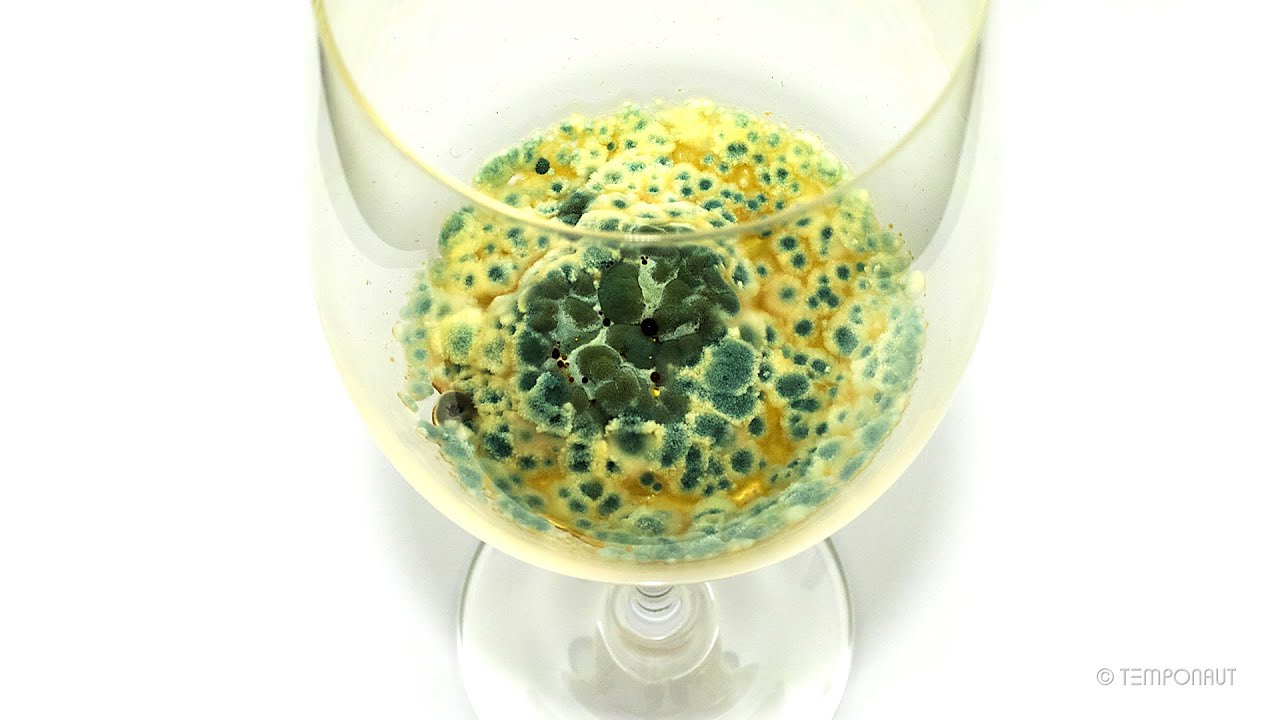
A glass of white wine left out to rot, filmed in relentless 4K.
There’s no crush pad here, no stainless steel tank, no winemaker checking Brix levels. Temponaut Timelapse’s “White Wine Time-lapse” takes a poured glass of white wine, leaves it exposed to open air, and lets the camera run until bacteria, evaporation, and mold take over. It’s decay photography, not vinification — and the footage is built to unsettle rather than educate.
- The video was produced by Temponaut Timelapse, a production project built around high-definition and 4K time-lapse footage of food decomposition, mold growth, and biological degradation.
- It documents a poured white wine sample undergoing evaporation, bacterial action, and surface mold formation over time — not fermentation or grape processing.
- The clip is catalogued under Temponaut’s “Fruits and Food” series, with stock tags including “white wine,” “alcohol,” and “mold” rather than winemaking or vinification terms.
The True Scope of Photography
Once white wine is poured into an open glass or container and left exposed, its alcohol content begins evaporating almost immediately, and the liquid’s chemistry starts shifting the moment it hits air. Temponaut’s lens sits fixed on that glass for the duration, compressing hours or days of change into a short, continuous sequence. There’s no cap of carbon dioxide bubbles forming, no yeast converting sugar — just liquid reduction, discoloration, and eventually mold spreading across the surface.
The visual arc runs from a clear, pale liquid to something visibly clouded and colonized. That transformation is the entire point of the piece: the same alcohol that’s stable in a sealed bottle turns into a growth medium the second it’s exposed and forgotten.
The Mechanics Behind the Rot
White wine spoils fast once poured because it loses the protective conditions — a sealed environment and minimal oxygen contact — that kept it stable in the bottle. Left in open air, the liquid reduces through evaporation while airborne bacteria and mold spores settle on the surface and begin multiplying. The video’s compressed timeline shows exactly how quickly that colonization takes hold once alcohol content starts dropping and the liquid becomes more hospitable to microbial growth.
No yeast tanks, no grape press — just a poured glass, open air, and mold winning the race against evaporation.
Part of a Larger Decomposition Catalog
This isn’t a standalone experiment. Temponaut Timelapse built its “Fruits and Food” catalog specifically around this kind of footage — fruit, bread, dairy, and now alcohol, all filmed decaying in extreme close-up over extended timeframes. The white wine entry fits the same visual language as the channel’s other decomposition studies: high-resolution detail, a static frame, and a subject that looks completely different by the final second than it did at the first.
Viewers drawn to this kind of footage tend to gravitate toward other slow-transformation content, whether it’s fungi cultivation, as covered in Temponaut-adjacent work on cultivating gourmet and medicinal mushrooms, or the opposite end of the spectrum — deliberate, controlled fermentation, like the process explored in bringing back the world’s oldest fermented beverage. Both hinge on the same microbial forces the white wine clip lets run unchecked.
Temponaut hasn’t published a runtime or exact day-count for this particular glass, but the channel’s pattern holds: shoot it locked-down, compress it hard, and let mold do the narrative work. If you’ve ever left a glass of Chardonnay on the counter overnight and found it cloudy by morning, this is that moment, just stretched out and impossible to look away from.





Inside Liv Tyler’s Gut-Renovated NYC Brownstone
INCREDIBLE AND INGENIOUS Hidden Rooms AND SECRET Furniture
Inside Dakota Johnson’s Serene Hollywood Home
Dan Bilzerian’s NEW HOUSE
Best Bug Out Tent on the market?