

 InfoSearched
Fifteen stories beneath a Kansas wheat field sits a nuclear-hardened condo complex with a waiting list and a price tag that starts north of a million dollars.
The old Atlas-F missile silos that once housed America’s Cold War arsenal were built to survive a direct nuclear strike. One of them, buried in rural Kansas, has been converted into something the U.S. Army Corps of Engineers never imagined: a sold-out luxury bunker community for people who can afford to buy their way out of the apocalypse. Inside Edition’s report takes cameras inside the Survival Condo Project, the brainchild of software engineer and contractor Larry Hall, to see what $2 million buys when the buyer is planning for nuclear war, pandemic, or societal collapse.
- The Survival Condo Project sits inside a decommissioned Atlas-F ICBM silo roughly 200 feet underground, with concrete walls up to 9 feet thick.
- Half-floor units run around $1.5 million and full-floor condos $3 million or more — and every unit in the complex is already sold to private owners.
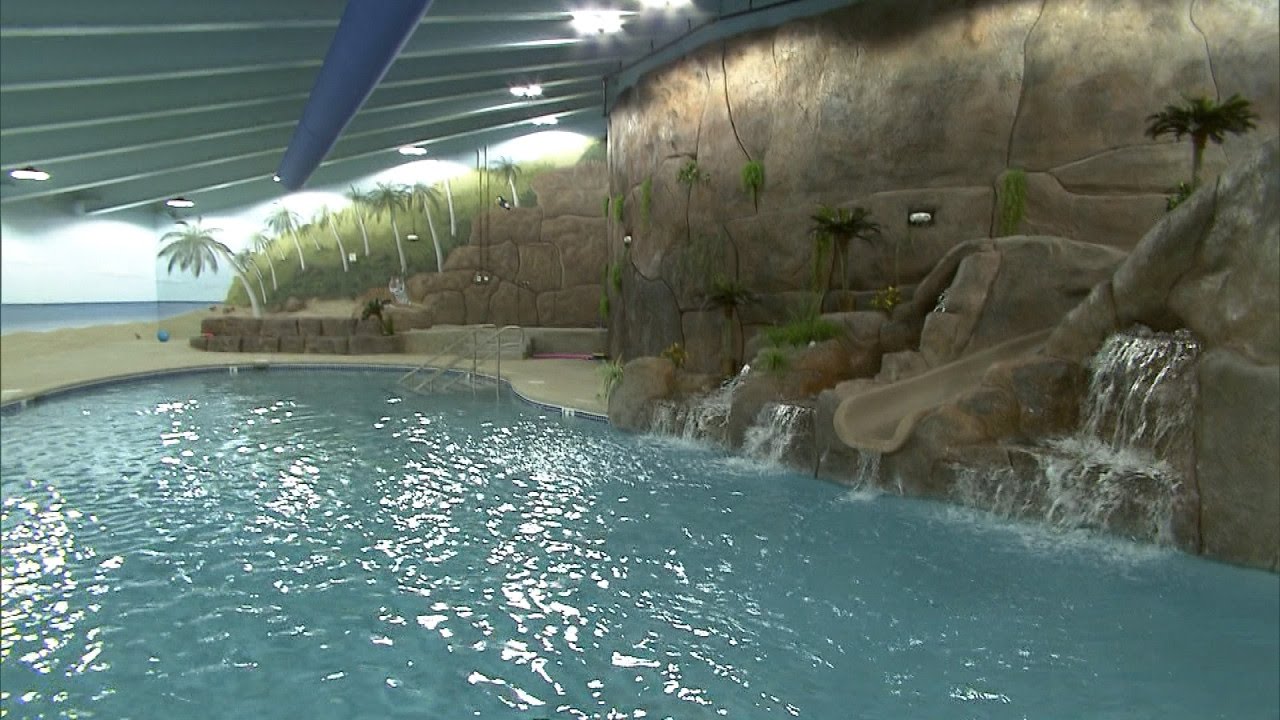
- The facility is designed to keep up to 75 people alive off-grid for as long as five years, with amenities including a 75-foot pool, a movie theater, a rock-climbing wall, and a digital shooting range.
Built From a Missile Silo, Not a Blueprint
Larry Hall didn’t start from a hole in the ground — he started with a hole the government already dug. The silo was originally engineered to shield an Atlas-F ICBM from a direct nuclear blast, which meant the reinforced concrete shell, the depth, and the blast-resistant geometry were already in place before Hall ever brought in a contractor. What he added was armored security doors, perimeter fencing, armed guards at the surface entrance, and roughly 15 stories of livable space stacked inside the original missile tube.
That combination — Cold War military engineering repurposed as private real estate — is what separates this from a typical storm shelter or safe room. It’s closer in spirit to the underground dwellings covered in Step Inside Australia’s Underground Homes, except this one is rated to withstand a blast, not just summer heat.
Identifying Current Market Buyers
The buyers aren’t casual doomsday hobbyists stocking a basement with canned goods — they’re the same demographic that shops for the kind of properties featured in Inside a $65,000,000 Beverly Hills Ultra Modern Mega Mansion, just redirecting a chunk of that budget toward survival instead of square footage. Half-floor suites start around $1.5 million; full floors run $3 million and up. Every unit in the complex has sold, which tells its own story about how many wealthy preppers are willing to pay seven figures for a hedge against nuclear attack, pandemic, civil unrest, or a major natural disaster.
Fighting Claustrophobia With Fake Windows
Living 200 feet underground for months or years creates an obvious psychological problem: no sunlight, no horizon, no sense of outside. Hall’s answer is the “digital window” — high-definition, wall-mounted screens in each condo that stream live camera feeds of the Kansas landscape above ground, or switch to pre-recorded footage of tropical beaches and mountain ranges when residents want a change of scenery.
Every condo in the silo is sold — buyers paid up to $3 million each for a floor 200 feet underground built to survive a direct nuclear blast.
It’s a low-tech fix for a high-stakes problem, and it’s a reminder that the hardest part of long-term bunker living isn’t the engineering — it’s the isolation.
Five Years Off the Grid
The complex is designed to sustain up to 75 residents completely off-grid for up to five years. Power comes from redundant sources — wind turbines paired with diesel generators — while air is scrubbed through chemical, biological, and radiological filtration systems. Water reserves run through reverse-osmosis purification, and food security is handled two ways: indoor hydroponics and aquaponics growing fresh vegetables and tilapia, backed by five years’ worth of freeze-dried food supplies per resident.
Community life inside is built to feel less like a bunker and more like a resort — a 75-foot indoor pool with a water slide, an indoor dog park, a fitness center, a classroom, a medical facility, and a digital shooting range all sit inside the same reinforced shell that once held an intercontinental ballistic missile.
With every unit sold and the silo at capacity, the real question for Larry Hall isn’t whether the concept works — it’s whether he builds another one. He’s talked about repeating the model in additional decommissioned silos, and given how fast this one filled up at $1.5 to $3 million a floor, the demand from wealthy preppers isn’t going anywhere.






Beautiful Tiny Turf House in Iceland – Full Tour & Interview
Skateboarding In A Global Pandemic | COVID-19 Los Angeles
Inside Dakota Johnson’s Serene Hollywood Home
Earth-cooled, shipping container underground CA home for 30K
Woman Who Can’t Feel Pain Eats One of the Hottest Chillies