

 InfoSearched
A journalist walks into a federal prison unit the Bureau of Prisons never officially named, and finds out why nobody’s supposed to talk about it.
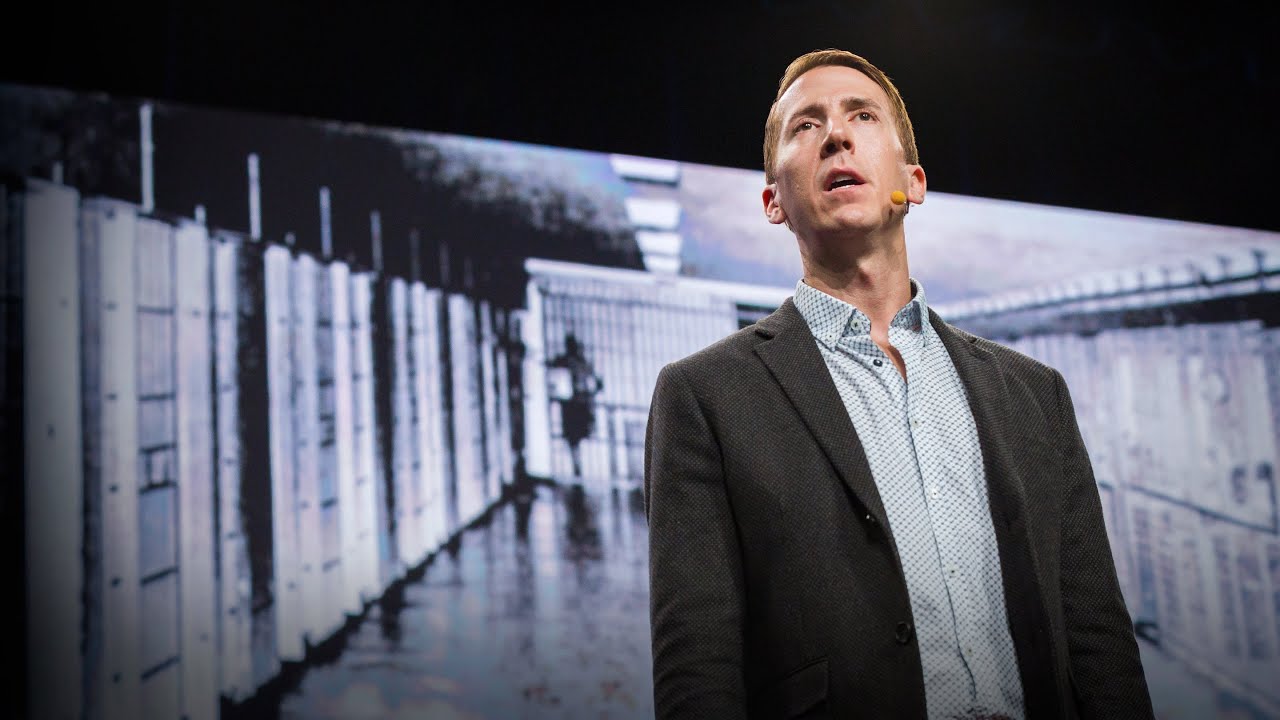
Will Potter spent years chasing a story most Americans didn’t know existed: a network of federal prison units built specifically to cut inmates off from the outside world. In his August 2015 TED talk, the investigative journalist laid out how Communications Management Units, or CMUs, came into being quietly, who actually ends up inside them, and what happened when he tried to report on one from the inside. He remains the only journalist known to have gained access to a CMU.
- The first CMU opened in Terre Haute, Indiana, under the George W. Bush administration after public pushback in 2006 killed a formal rulemaking process — a second unit followed two years later in Marion, Illinois.
- Potter visited environmental activist Daniel McGowan, sentenced in 2007 to seven years for his role in Earth Liberation Front arsons and later transferred to a CMU, where prison administrators threatened to penalize him for granting the interview.
- Bureau of Prisons Director Harley Lappin told Congress the units hold “second-tier” terrorism-related prisoners to limit communication, not movement — a claim the Center for Constitutional Rights and the ACLU dispute, saying the units disproportionately hold political dissidents and Muslims with no clear criteria for placement and no formal appeals process.
The Origins of the Units
The Bureau of Prisons tried to formalize CMUs through standard federal rulemaking in 2006. Public opposition sank that effort — so the agency built the units anyway, just without the paperwork. Terre Haute opened first, followed by Marion, Illinois two years later, and both operated for years with almost no public acknowledgment of what distinguished them from ordinary federal custody.
That absence of a formal rule is central to Potter’s reporting. Without published criteria, there was no clear standard for who gets sent to a CMU, no timeline for how long they stay, and — according to the Center for Constitutional Rights and the ACLU — no meaningful path to appeal the designation once it’s made.
Inside the Wire With Daniel McGowan
Daniel McGowan gave Potter his way in. McGowan, sentenced in 2007 to seven years for arsons tied to the Earth Liberation Front, was moved into a CMU after his conviction. When word got out that he intended to sit for an interview, prison administrators warned him he’d face penalties for talking. He did the interview anyway, and administrators later disciplined him again after he published an account of the unit on the Huffington Post.
Potter says the retaliation against McGowan wasn’t incidental — it was the point. The message, as he put it, was blunt: don’t talk about this place. That pattern of quiet threats and after-the-fact discipline is what convinced Potter the units were built as much for secrecy as for security.
The Official Line Versus the Watchdogs
Testifying before Congress, then-Bureau of Prisons Director Harley Lappin described CMUs as housing “second-tier” prisoners connected to terrorism cases, framing the units as a communications restriction rather than a physical one — inmates could still move and interact within the unit, they just couldn’t reach the outside world the way general-population prisoners can.
Civil liberties groups tell a different story. The Center for Constitutional Rights and the ACLU found the population skewed heavily toward political dissidents and Muslim inmates, many with no terrorism conviction that would obviously warrant the designation. Without published rules governing who lands in a CMU or how to challenge that placement, both organizations argue the units function as an end-run around the due process protections that apply everywhere else in the federal system.
“The message was clear,” Potter says. “Don’t talk about this place.”
Daily Life Inside the Units
The restrictions Potter documents are narrow and specific. Phone calls are rare and require pre-approval rather than the standard call allotments other federal inmates get. Mail is restricted and screened more heavily than in general population. Visits happen without physical contact — no hugging a spouse, no hugging a child — a detail Potter returns to repeatedly because it captures how far the isolation reaches beyond simply monitoring what inmates say.
Readers who’ve followed InfoSearched’s coverage of confinement inside the federal system, including The Most Secretive Unit in United States, will recognize the pattern: administrative secrecy doing the work that a public rule or a court order would normally do, just without the oversight either would require.
The Precedent Potter Warns About
Potter’s argument isn’t really about seven inmates at Terre Haute or a few dozen at Marion. It’s about the mechanism — a prison unit built by policy memo rather than public rule, populated according to standards nobody outside the Bureau of Prisons can see, with no clear way to contest a placement once it’s made. He frames that as a template, not an anomaly, one that other high-security or high-profile custody situations covered elsewhere, like Billionaire in ‘World’s Toughest’ Prison Accused of Cop’s Death, show can spread once secrecy becomes an accepted substitute for judicial oversight.
Potter’s talk ends where his reporting started: with McGowan still barred from hugging his own family during visits, years after his sentencing, under a designation nobody at the Bureau of Prisons has ever fully explained on the record.








Millions of Mice Are Terrorizing Australia
Simple Log Cabin- Built for $500- No Permit Required
Here’s What a Lion Does After Being Banished From the Pride
The Extraordinary Case of Alex Lewis
Eating Giant Rat with Miss Nigeria!!