

 InfoSearched
An inch-and-a-half-long hornet with a face like a Halloween mask has North America on edge.
The Asian giant hornet — Vespa mandarinia, nicknamed the “murder hornet” — was never supposed to make it across the Pacific. But after a nest turned up on Vancouver Island in September 2019 and a single specimen was confirmed in Blaine, Washington that December, the world’s largest hornet species has become the insect nobody in the Pacific Northwest wants to find in their backyard. Six minutes of video lays out exactly why entomologists are taking it seriously, and why some of the panic around it is overblown.
- The Asian giant hornet can grow up to two inches long with a three-inch wingspan, and was first confirmed in the U.S. near Blaine, Washington in December 2019 after an earlier nest was destroyed on Vancouver Island in September 2019.
- By May 2020, Washington officials had verified four confirmed detections in the state as the Washington State Department of Agriculture (WSDA) ramped up trapping and mapping efforts to find overwintering queens before new nests could form.
- In their “slaughter phase,” a small group of hornets can decapitate thousands of honeybees and strip a hive in a matter of hours, which is the real ecological alarm behind the nickname.
Distinctive Hornet Species Characteristics
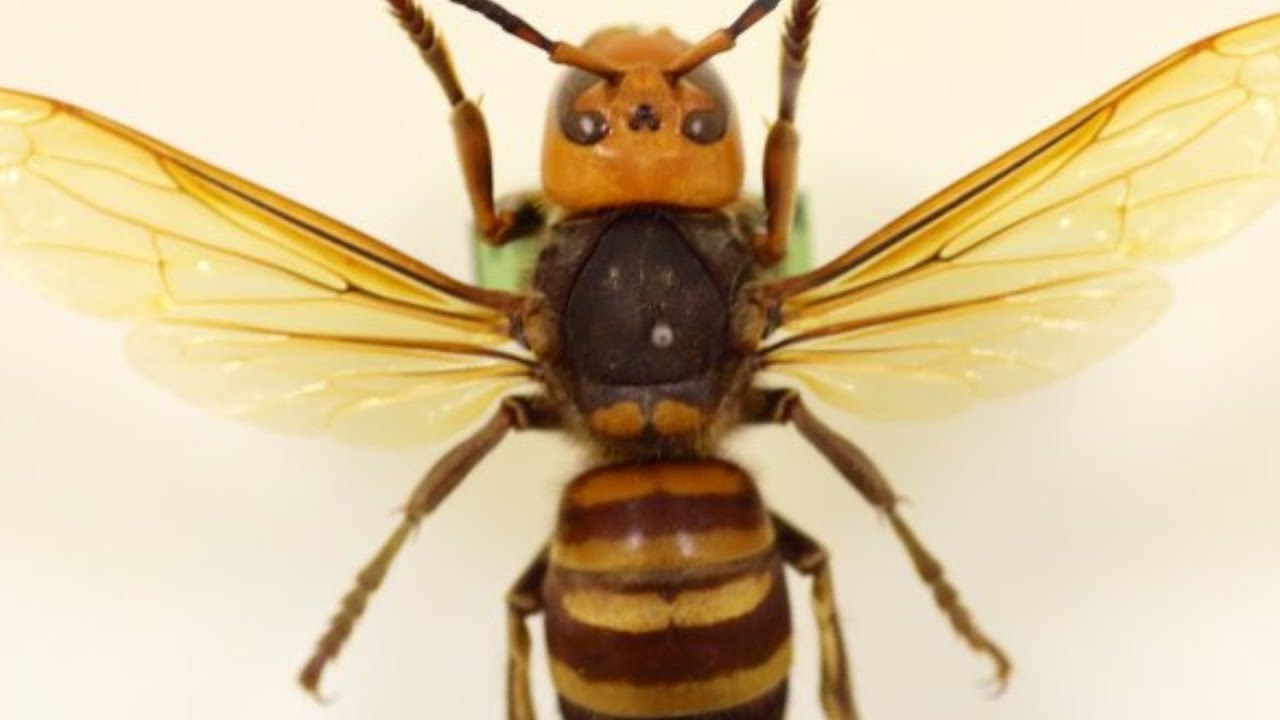
Size is the first tell. Queens can stretch to two inches with that three-inch wingspan, dwarfing anything beekeepers in the Pacific Northwest are used to swatting away. Susan Cobey, a bee breeder with Washington State University’s Department of Entomology, put it bluntly, describing the insect as looking “like something out of a monster cartoon, with this huge yellow-orange face.”
That face — a distinctive yellow-orange head on a dark, striped body — is what separates it from native wasps and hornets at a glance. It’s also armed with a stinger long enough and venom potent enough to punch through protective gear that normally stops a bee or wasp sting cold.
The Sting Itself
Conrad Bérubé, a beekeeper who was stung roughly seven times while destroying a nest, told The New York Times it was the most painful sting he’d experienced in a career full of them — comparing it to hot metal being driven into the skin. The venom carries a heavy dose of neurotoxins, and because the hornets can sting repeatedly without dying, multiple hits compound quickly.
“Like something out of a monster cartoon, with this huge yellow-orange face.”
One sting alone typically won’t kill a healthy adult, but the cumulative venom load from several stings can be fatal, particularly for anyone with an allergy. In Japan, where the species is established, the hornets are blamed for as many as 50 deaths a year. Still, entomologists stress that number reflects Japan’s dense human-hornet overlap, not a sign these insects go hunting for people the way the nickname implies.
The Real Target Is the Hive
Despite the human-focused headlines, scientists say honeybees are the actual casualties. A handful of hornets working together can wipe out a colony of thousands of European honeybees within hours, decapitating workers and occupying the hive to feed on the brood — a pattern researchers call the “slaughter phase.” For an agricultural system that depends on managed hives for pollination, that’s the threat that has apiarists and state agriculture officials genuinely worried, more than any risk to people walking their dogs. It’s the same reason clips like Top 5 Ferocious Hornet Moments keep circulating — hornets attacking prey en masse is startling to watch even when humans aren’t involved.
Pushback Against the Panic
Not every expert is on board with the “murder” branding. Lynn Kimsey of UC Davis and Douglas Yanega of UC Riverside have both pushed back on the sensational coverage, pointing out that Asian giant hornets rarely go after humans unless their nest is being disturbed, and that as of the reports coming out of Washington, there was no evidence of the species establishing a widespread population in North America. That’s exactly why WSDA’s Rian Wojahn described the state’s response as “an aggressive outreach and trapping campaign” rather than an emergency — the goal is finding and eliminating queens before they can start colonies, not fighting off swarms. Anyone curious how other outsized insect and animal confrontations play out can see the stakes laid out in The Most Extreme Wild Animals Battles!
For now, it comes down to four confirmed Washington sightings, a handful more across the border in British Columbia, and a trapping season that will decide whether this stays a contained Pacific Northwest story or turns into something bigger. Wojahn’s team is banking on catching queens before they ever get a nest off the ground.








30 Healthy Habit Hacks You Need To Know!
Scottish Rasta Wanny’s Yard Tour! Mokko’s Neighbour in Jamaica
Everything You Need To Know About ‘Murder Hornets’
CANNONBALL FRUIT Review : Incredibly bizarre and beautiful tree
Infiltrating Scientology Ep 1: Sunday Church Service