

 InfoSearched
Deep in the rainforests of the Central African Republic, VICE correspondent Thomas Morton went looking for the gut bacteria the industrialized world lost.
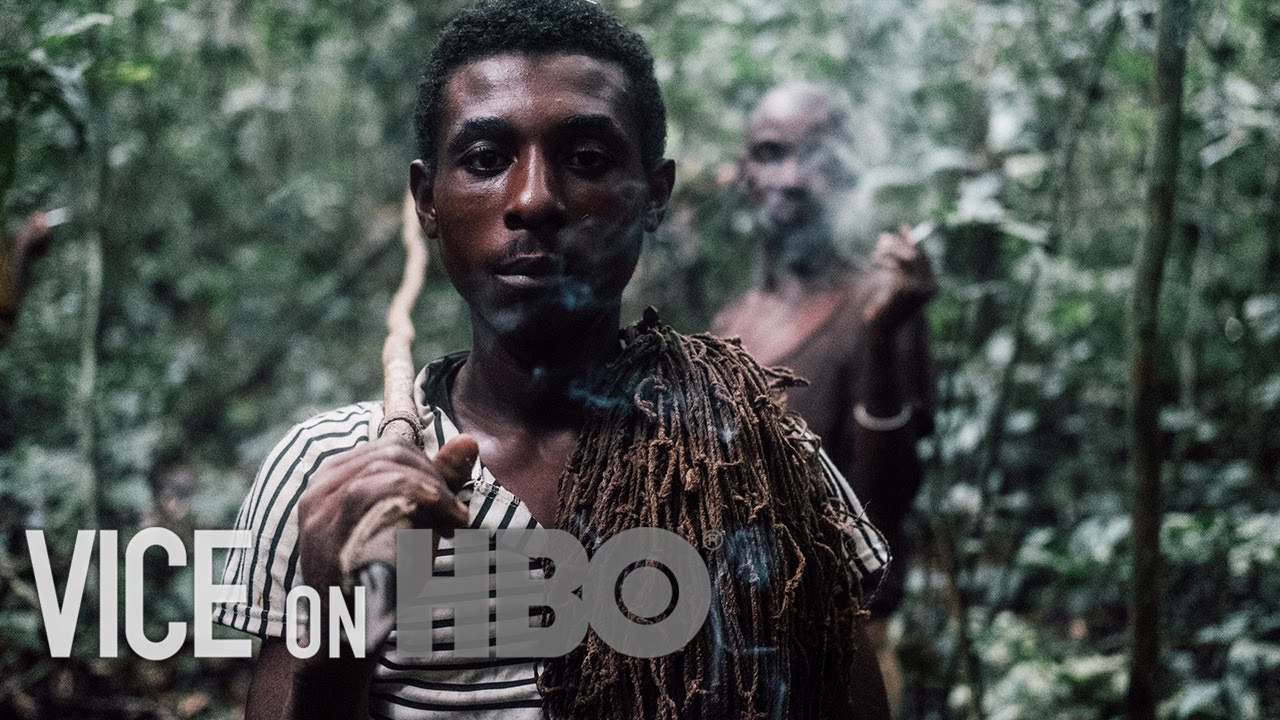
The 2017 VICE on HBO episode “Microbiome” sends Thomas Morton to the southwestern forests of the Central African Republic to find out what antibiotics, sanitation and processed food have stripped out of the modern human gut. His guide is a growing body of research on the BaAka, a hunter-gatherer people whose diet and lifestyle have barely changed in generations, and their farming neighbors, the Bantu. The comparison, scientists tell Morton, is the closest thing available to a time machine for the human microbiome.
- The BaAka eat as much as 100 grams of plant fiber a day from wild roots, tubers and berries — far above what’s typical in Western diets — and carry high levels of fiber-fermenting bacteria like Prevotella, Treponema and Succinivibrio.
- Researchers found the BaAka also host distinct parasitic microbes such as Blastocystis, organisms some scientists believe help “train” the immune system under the so-called old friends hypothesis.
- By comparing BaAka foragers, Bantu farmers and industrialized populations side by side, the researchers concluded that diet and subsistence lifestyle — not genetics — is the main driver of gut microbiome diversity.
The Decline of Modern Gut Health
Morton’s reporting starts from a blunt premise: antibiotics and sanitation have added years to life expectancy in industrialized countries, but they’ve also wiped out huge chunks of the bacterial ecosystem that evolved alongside humans for millennia. That trillions-strong community — the microbiome — helps run digestion and calibrate the immune system. Its erosion has been linked to the modern surge in autoimmune disorders, allergies and a growing vulnerability to antibiotic-resistant superbugs.
Rather than study that decline in a lab in Boston or London, the scientists Morton follows went looking for populations where the decline never happened. That search led to the handful of remaining pre-industrial societies on the planet, and specifically to the rainforest communities of Central Africa.
Inside BaAka Territory
The BaAka are hunter-gatherers who still draw the bulk of their calories from wild forest foods — roots, tubers, berries and game — rather than farmed staples. Researchers accompanying Morton had already documented that this diet, loaded with up to 100 grams of plant fiber daily, correlates with a gut ecosystem dominated by fiber-degrading bacterial lineages considered ancestral to the human line, including Prevotella, Treponema and Succinivibrio.
Those same guts also carry organisms that most Western medicine treats as unwelcome guests. Blastocystis, a parasitic microbe found widely among the BaAka, is one example scientists point to when discussing the old friends hypothesis — the idea that some of the “bugs” modern hygiene eliminated were actually doing useful immune-calibration work all along.
The BaAka’s guts host bacterial lineages so ancestral, and so diverse, that researchers say they look almost nothing like what’s found in a typical Western colon.
The Bantu Comparison Point
To isolate what’s actually driving the difference, the researchers didn’t stop at the BaAka. They also sampled the Bantu, farming communities living nearby who share the region and, in many cases, genetic ancestry with the BaAka but eat a markedly different, more cultivated diet. The gut profiles diverged sharply between the two groups despite the geographic and genetic overlap — evidence, the scientists argue, that subsistence lifestyle and diet are doing the heavy lifting, not DNA.
That distinction matters for anyone trying to bottle the benefits. If genetics were the deciding factor, ancestral gut bacteria would be locked to specific populations. If diet and lifestyle are the deciding factor instead, the argument goes, there’s a path toward reintroducing some of those microbial strains — or their functions — into industrialized guts through next-generation probiotics or targeted microbial therapies.
Implications for Disease and Superbugs
Morton’s reporting frames the BaAka and Bantu fieldwork as more than an anthropological curiosity. Scientists studying these communities see a potential blueprint for treating chronic inflammatory conditions and for fighting antibiotic-resistant infections, since a richer, more resilient microbiome may crowd out or outcompete the pathogens that current antibiotics are losing ground against. That’s the same territory covered by other VICE-style field reporting on frontier science and remote populations, the kind that shows up regularly in the Documentaries archive.
None of it is presented as a quick fix. Mapping which bacterial strains matter, understanding how they interact with a host immune system, and then translating that into something deliverable outside a rainforest is a long road. But the CAR fieldwork gave researchers a clearer picture of exactly what industrialized guts are missing — and, just as important, why.
Morton’s trip is one entry in a run of VICE field reports built around isolated communities whose daily life reveals something science has otherwise lost track of — the same instinct behind pieces like the look at tribal communities defying conventional expectations. The next step for the microbiome researchers isn’t a headline-grabbing cure — it’s years of follow-up sampling across BaAka camps and Bantu villages to see which specific strains, out of that sprawling bacterial census, actually do the work.









Simple Tricks to Keep Your Garden PEST FREE!
Former judge Leticia Astacio sentenced to 180 days in jail
Here’s where New York City’s sewage really goes
Locked Bucks Freed with Chainsaw
Saving People From Massive Waves… They Almost Drowned