

 InfoSearched
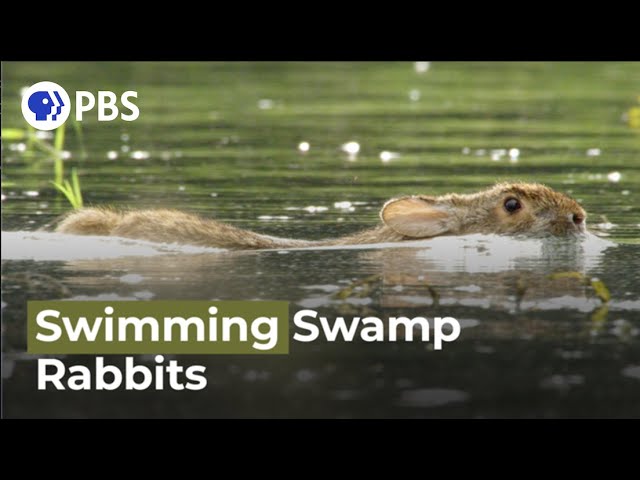
Deep in the Mississippi Valley’s flooded bottomlands, a camera crew documented something no one had ever filmed before: a wild rabbit swimming.
The clip, titled “Swimming Rabbits Caught on Camera,” comes from PBS Nature’s Season 38 episode “Remarkable Rabbits,” which aired in April 2020. It shows wild swamp rabbits — Sylvilagus aquaticus — paddling across open water in the wetlands and swamps of Missouri, part of a species so shy that even other swamp animals rarely lay eyes on one. The footage marks the first known documentation of this behavior in the wild.
- The footage is the first-ever known recording of wild swamp rabbits swimming, filmed in the Mississippi Valley wetlands of Missouri for PBS Nature’s “Remarkable Rabbits” episode.
- Swamp rabbits are the largest cottontail species in the world, and their size and muscular build give them natural buoyancy that lets them swim with ease.
- PBS reported that swamp rabbit numbers were holding steady wherever connected wetlands and waterways remained intact along the Mississippi river basin, even as other native rabbit species were declining.
A Species Built Different
Swamp rabbits don’t look like your average cottontail, and they don’t live like one either. They favor muddy floodplains, bottomlands, and cypress swamps — terrain that keeps them hidden not just from predators but from nearly everyone else, wildlife and researchers included. Their bulk, the largest of any cottontail species on the planet, is exactly what turns a liability on land into an advantage in the water.
The documentary frames that size as the animal’s defining trait: a naturally buoyant, muscular frame that lets them swim without the frantic thrashing you’d expect from a rabbit dropped in a river. It’s a stark contrast to species covered in This Is Why the Childhood of Rabbits Is so Terrible, where vulnerability, not adaptation, defines the story from birth.
The Bunny-Paddle in Action
The footage captures the rabbits crossing open waterways using what the narrator calls a “bunny-paddle” — a swimming motion that looks effortless compared to the awkward doggy-paddle most mammals default to. It isn’t a party trick. Swimming lets swamp rabbits escape predators that can’t follow them into deep water, forage in places other rabbits can’t reach, find mates across flooded terrain, and disperse into new territory when lowlands flood.
Back on dry land, they don’t hop so much as launch — bounding more like small deer than typical cottontails, which is why the documentary calls them the “iron men of the rabbit world.”
That combination — powerful swimmers in the water, explosive jumpers on land — is what separates swamp rabbits from nearly every other rabbit species featured in nature programming, and why crews chased this footage for as long as they did.
Population Levels Remain Consistent
PBS Nature noted that while several native North American rabbit species have seen their numbers shrink under habitat and ecological pressure, swamp rabbits have fared better wherever wetlands and waterways along the Mississippi river basin remain connected and preserved. The species’ survival is tied directly to the health of that flooded lowland habitat — lose the water, and the swamp rabbit loses the advantage that makes it unique.
It’s the kind of story that lines up with the broader run of wildlife footage InfoSearched’s Documentaries coverage tracks — animals whose survival hinges less on brute strength than on a very specific, very narrow set of terrain staying intact.
“Remarkable Rabbits” doesn’t just introduce a new behavior — it introduces a species most viewers have never heard of, doing something no camera had ever caught before. For a family of animals usually defined by fragility, watching one bound out of a Missouri swamp after a swim is the rare cottontail moment that actually earns the word remarkable.






Marines Take Tazer Shot Like a Boss! US Marines Tazer Training
DMT Sent Him Into the Multiverse
I Only Ate Food That I Grew Or Foraged For One Year
How to Make Hourglass Diorama | Resin Art
How To Create a Watertight Underground Bunker & Food Cache for $699