

 InfoSearched
In London’s East End, fast food had eel liquor before anyone invented a drive-thru window.
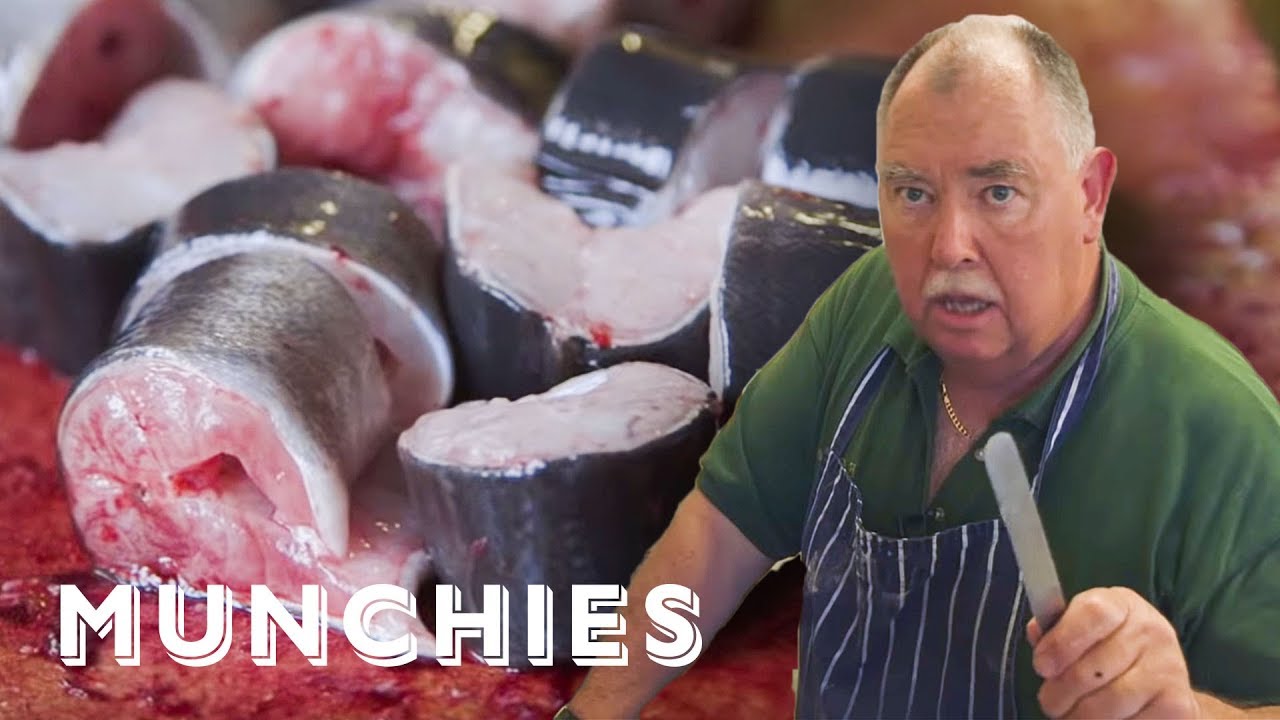
Long before burger vans and kebab shops colonized Hoxton Street, working-class Londoners were lining up for a plate of minced beef pie, plain mashed potato, and a bright green sauce made from stewed eel broth. That dish, and the shop that still serves it exactly the way it did generations ago, is the subject of this Munchies feature on F. Cooke at 150 Hoxton Street, run by fourth-generation owner Joe Cooke.
- Robert Cooke opened the family’s first pie shop in 1862 and is widely credited with originating the pairing of meat pie, mashed potato, and “liquor” — a parsley-and-flour sauce made from stewed eel broth, with no alcohol involved.
- Joe Cooke, Robert’s great-grandson, now runs F. Cooke at 150 Hoxton Street as the fourth generation of the family behind the counter.
- The shop’s unwritten rules are absolute: it’s a “shop,” never a “restaurant,” orders are eaten with a spoon and fork, and asking for gravy or buttered mash is not on the table.
A Recipe Unchanged Since Victorian London
Pie and mash didn’t start in a kitchen with a chef in a toque — it started on carts by the Thames, where Victorian vendors sold eels straight out of the river to dockworkers who needed cheap, filling food on a break. Robert Cooke took that street trade and put it under a roof in 1862, building one of the first proper pie shops in the East End. The tiled walls and sawdust floors that followed weren’t decoration; they were practical, easy to hose down after a lunch rush of dockers and market traders.
That template barely changed for more than 150 years. Joe Cooke is still working the same corner of Hoxton Street his great-grandfather claimed, serving a dish that was London’s original fast food long before the term meant anything else.
The Craft Behind the Plate
Cooke walks through a process that hasn’t been simplified for speed or margin. The pies use two separate doughs — a suet pastry for the base and a shortcrust for the lid — filled with beef that’s minced and seasoned on site rather than bought pre-mixed. The mash is boiled plain, with no butter added, because butter isn’t part of the recipe and never has been. The finishing touch is the liquor, ladled on top and often cut with chilli vinegar at the table.
It’s a short list of components, but every one of them is done the same way it was done a century ago, which is precisely the point for a shop that has resisted every trend in modern food service.
The Unwritten Rules of a Pie and Mash Shop
Cooke is just as firm about the culture around the food as the food itself. Call it a restaurant and you’ve already gotten it wrong — it’s a shop. Order comes with a spoon and fork, not a knife, and there’s no version of the transaction where gravy or buttered mash gets waved through.
Ask for gravy at F. Cooke and you’ll get a look, not a ladle — buttered mash isn’t on the table either.
That rigidity is exactly what has kept shops like this one alive while so many others of its kind have closed. For a deeper look at how old-world food traditions survive against modern pressure, the same stubbornness shows up in pieces like Bringing Back The World’s Oldest Fermented Beverage, and in the way river-to-table traditions get documented in Fishpeople | Lives Transformed by the Sea.
F. Cooke is still standing at 150 Hoxton Street, still run by a Cooke, still refusing gravy to anyone who asks — which, four generations after Robert Cooke first opened the doors in 1862, is about as close to a guarantee as London’s East End gets.









Living on a Self-Sufficient Sailboat for 10 Years
Enormous Ocean Sunfish Caught on Camera Cleaning Itself
Why Real Champagne Is So Expensive?
Why Dubai’s Man-Made Islands Are Still Empty
“It Will Be an OPEN SOURCE Platform” [Ultra Classified Information!!!]