

 InfoSearched
Thirty-five people, one atoll, and no way in except by boat.
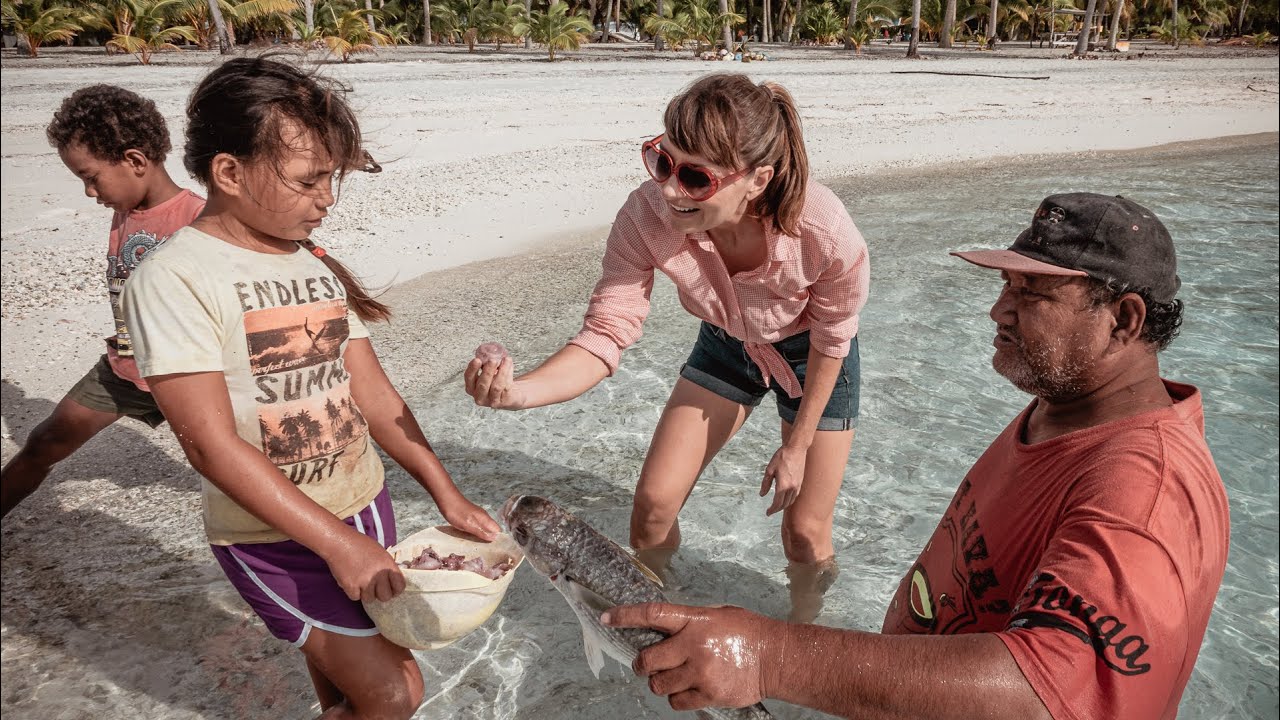
Sailing vloggers Nikki and Jason Wynn dropped anchor off Palmerston Island in July 2019, during their South Pacific passage through the Cook Islands, and came away with one of the strangest, warmest stops of their entire voyage. Their December 8, 2019 video, “Real Life on a Remote Island 🏝️ || Palmerston Cook Islands – Population 35,” documents a coral atoll with no airstrip, no natural harbor, and a population that can fit in a single classroom. Every person on Palmerston, all 35 of them, descends from one English sailor and his three wives.
- Palmerston’s entire population traces back to William Marsters, an English sailor who settled the atoll in the 1860s with three Polynesian wives.
- Visiting yachts aren’t allowed to just anchor and go ashore — tradition requires each boat be “adopted” by one of the island’s family lines; the Wynns were taken in by a local named Bob and his family.
- The island council, made up of heads of household from the different family branches, is split over modernization — fishing restrictions, commercial coconut exports, and a proposed landing strip are all live disputes.
Life at the End of the Supply Line
Cargo ships reach Palmerston only once every few months, so the Wynns found a community running almost entirely on what the ocean and the palm trees provide. Fish and coconuts form the backbone of daily meals, and solar panels handle the island’s power needs between supply runs. There’s no hotel, no restaurant, no store stocked the way a mainland traveler would expect — just households that plan around scarcity as a matter of routine.
That rhythm shaped the Wynns’ days on the atoll as much as it shapes life for residents. Afternoons brought pickup soccer games with the island’s kids, including a boy named Henry, on sand pitches surrounded by water on every side. It’s the kind of unhurried, all-hands-on-deck existence sailors chase across an ocean — similar in spirit to what the crew behind Catch and Cook from ISOLATION – Uninhabited Island Paradise! Sailing Vessel Delos Ep. 272 found on their own stretch of empty South Pacific water.
The Adoption System
Nothing about arriving at Palmerston works the way it does at a normal port. There’s no natural harbor and no dock for cruising boats to tie up to, so incoming yachts have to be brought into the fold by one of the island’s family lineages before anyone comes ashore. For the Wynns, that meant being adopted by Bob and his relatives, who became their hosts, translators, and effectively their family for the length of the stay.
The system isn’t a formality — it’s how a community of 35 people manages the logistics and social pressure of hosting strangers on an island where every resident is already someone’s cousin. It also means every visiting sailor’s experience of Palmerston is filtered through whichever family takes them in, shaping who they meet, what they eat, and how deep they get into island life during their stop.
An Island Council Divided
Palmerston has no political parties and no mayor in the conventional sense. Governance runs through an island council built from heads of household representing the different family branches descended from Marsters — and Nikki Wynn found real friction inside that room.
The council heads disagree sharply over whether to impose fishing restrictions, chase commercial coconut exports, or build a small landing strip.
Those three proposals sit at the center of the island’s future. Fishing limits would protect a resource the community depends on for daily food. Commercial coconut exports could bring in outside income the atoll currently doesn’t have. A landing strip would end Palmerston’s total dependence on infrequent supply ships and unpredictable sea access — but it would also change an isolation that’s defined the place for over 150 years.
Isolation With a Ticking Clock
Even as the video captures the idyllic side of atoll life — soccer on the sand, solar-powered evenings, a family-run welcome for visiting sailors — it doesn’t gloss over what’s stacked against Palmerston long-term. A population of 35 is vulnerable simply by its size; every departure or death shifts the balance of an already tiny community. Rising sea levels add a second, slower threat to a coral atoll that sits barely above the waterline to begin with.
Those pressures put Palmerston in the same conversation as other tiny, disappearing-by-degrees island communities that sailors and travelers have documented in recent years, including the residents profiled in Survival on the smallest island in the Caribbean. The difference on Palmerston is that the debate over what to do about it — restrict the fishing, sell the coconuts, build the airstrip — is happening in real time, inside a council room with maybe a dozen people in it, all related to each other.
The Wynns eventually sailed on, the way every visiting yacht does once its adopted family says it’s time. Whatever the council decides about that landing strip will determine whether the next boat’s introduction to Palmerston looks anything like theirs did.







World of Cryonics – Technology That Could Cheat Death
Man shares apartment with family of huge owls
Herbert Nitsch, The Deepest Man On Earth
How Paranoid Schizophrenia Impacts My Life – A Day in the Life
Robert Wadlow, The Tallest Man in History