

 InfoSearched
Rain doesn’t put out a fire — it just changes the rules for building one.
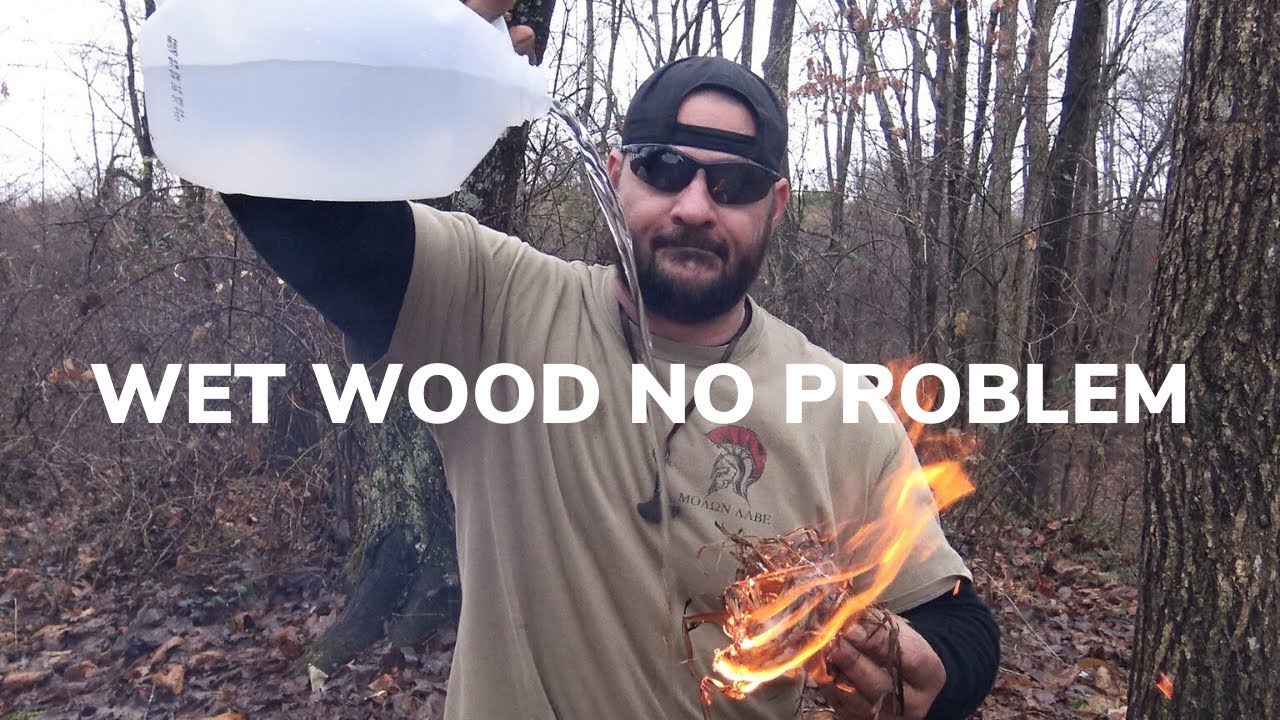
Bushcraft instructor and Army veteran Shawn Kelly runs Corporals Corner, a YouTube channel built almost entirely on the premise that skills only matter when conditions are bad. In “How To Make and Sustain a Fire in The Rain,” he skips the dry-weather shortcuts and walks through the exact sequence he uses to get a fire lit and kept alive when the ground is soaked and water is still falling. The core trick isn’t a gadget — it’s knowing where dry wood actually hides on a wet day.
- Kelly avoids ground-fall timber entirely, instead sourcing standing deadwood and dead lower branches still attached to live trees, which stay dry on the inside even after hours of rain.
- He batons larger wet logs down the middle with a fixed-blade belt knife and a wooden club to expose dry heartwood, then carves that interior wood into feather sticks and fine curls for tinder.
- He builds an elevated log platform to keep the initial ember off saturated soil, stages fuel by size — tinder, pencil-lead twigs, pencil-sized kindling, split fuel — and lights the pile with a ferro rod struck against the 90-degree spine of his knife.
Reading the Wood Before You Cut It
The first mistake most people make in the rain is grabbing whatever’s on the ground. Kelly’s demonstration makes the opposite case: ground-fall wood has been sitting in standing water and soaking up moisture for who knows how long, while a dead branch still hanging on a tree trunk has been shielded by the canopy and stays drier straight through. He works the treeline snapping off dead limbs and locating standing dead trunks, then splits the exterior bark and sapwood away to get to the core.
That splitting step — batoning — is the whole method in miniature. A round of wood that looks hopelessly wet on the outside will almost always have a dry center, and Kelly drives his knife through with a baton stick to open it up and expose that heartwood, the same approach he’s shown building shelters from scratch in wet conditions on builds like the Iron Age roof build filmed in soaking rain.
Building Tinder That Can Beat Moisture
Once the dry core is exposed, Kelly shaves it into feather sticks — thin, curling shavings still attached at the base of the stick that create a huge surface area for a spark to catch. He carries this through several grades: fine curls and shavings for the initial ignition, then pencil-lead-sized twigs, then pencil-sized kindling, then the larger split fuel, with every stage cut and staged under a tarp or natural cover before he ever strikes a spark.
Dry wood is never actually gone in the rain — it’s just further inside the log than you’re used to looking.
That staging discipline is what separates a fire that catches from one that gaslights you into believing it caught, only to die the moment you look away. Having every size of fuel already cut and within arm’s reach means there’s no scramble to process wood one-handed while a fragile ember is burning down.
Keeping the Ember Off the Ground
Cold, wet soil pulls heat out of a nascent fire faster than most people account for, so Kelly constructs a raised platform from split wood before he ever lights anything — essentially a small raft of logs that isolates the tinder bundle and first coals from the saturated ground underneath. It’s a technique that echoes the same off-the-ground thinking behind his other cold-and-wet builds, including the solo overnight sandbag shelter he’s filmed in the woods.
With the platform down, he strikes a ferrocerium rod against the 90-degree spine of his belt knife, throwing sparks directly into the dry inner-wood shavings until an ember catches and the tinder bundle flames up.
Feeding the Flame Until It Can Handle Wet Fuel
From there it’s a graduated feed: split dry kindling goes on first, progressively larger pieces follow as the coal bed builds, and only once there’s real heat underneath does Kelly bring in the bigger, still-damp logs — arranging them around the perimeter of the fire rather than on top of it. The ambient heat dries those outer logs out before they ever touch the flame directly, so by the time they’re added, they’re burning instead of smothering the fire.
It’s the same patience-over-shortcuts approach that runs through most of Kelly’s Corporals Corner catalogue, whether he’s processing pine needles into cordage baskets or rigging shelter from plastic wrap — get the fundamentals right in stages, and the wet weather stops being the enemy.







Top 5 Deadliest Substances on Earth
Walking Through An Ancient Ice Cave
Living on a Self-Sufficient Sailboat for 10 Years
GIANT MANTIS SHRIMP – CATCH, CLEAN, COOK
BIG SWORDFISH HEARTBREAK AND TRIUMPH -YouFishTV