

The surprising way this Mexican state is fighting the cartels | The Americas with Simon Reeve
 InfoSearched
In one Mexican state, farmers picked up rifles because nobody else would fight the cartels for them.
In the fourth episode of BBC Two’s “The Americas with Simon Reeve,” the presenter leaves the border towns of Texas behind and crosses the Rio Grande into a Mexico gripped by cartel violence. What he finds isn’t a country waiting for help from the top down — it’s farmers, avocado growers and shopkeepers who got tired of paying extortion money and started arming themselves instead.
- Reeve travels into Michoacán to document the rise of “autodefensas” — armed civilian self-defense militias formed by farmers, avocado growers and local business owners to physically repel cartel incursions.
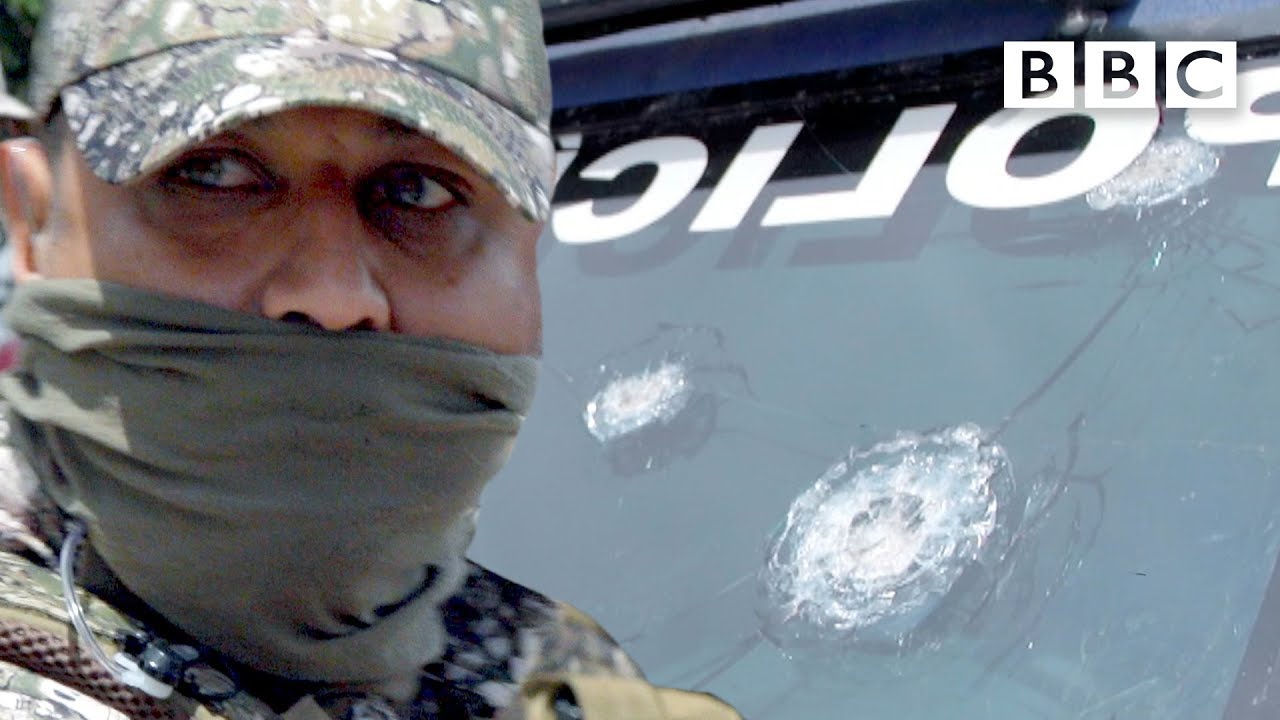
- He visits an elite police headquarters in Reynosa, Tamaulipas, one of the most violent border cities in Mexico, to see the militarized task forces built specifically to combat cartel operations.
- The episode contrasts these armed responses with local efforts to rebuild the region’s economy around lawful industries, giving residents an alternative to cartel money.
Citizens Taking Over Policing Duties
The autodefensas didn’t emerge because Michoacán’s institutions were merely weak — they emerged because those institutions had been outright overwhelmed. Cartels ran extortion rackets against farmers and avocado exporters, kidnapped for ransom, and carved up territory with a level of violence local police forces couldn’t or wouldn’t confront. Reeve’s reporting shows ordinary residents — men who spent their days picking limes and avocados — picking up rifles instead, forming militia units to hold ground the state had effectively abandoned.
It’s a strategy documented across multiple parts of Mexico in recent years, and it sits alongside other reporting InfoSearched has covered on how Mexican drug cartels make billions through exactly the kind of extortion and territorial control that pushed these communities to arm themselves in the first place. The autodefensas aren’t a police force in any legal sense — they’re neighbors with guns, deciding they’d rather fight than keep paying.
Inside Reynosa’s Elite Task Force
Where Michoacán’s response came from the ground up, Tamaulipas shows the state’s own answer to the same problem. Reynosa sits directly across from McAllen, Texas, and has for years been one of the deadliest flashpoints in the drug war, contested territory for rival factions of the Gulf Cartel. Reeve visits an elite police headquarters there to examine the specialized, heavily militarized units Mexican authorities have built specifically to take on cartel gunmen — officers trained and equipped closer to soldiers than traditional beat cops.
The contrast Reeve draws is deliberate: on one side, civilians filling a vacuum with rifles and checkpoints; on the other, a state trying to match cartel firepower with its own specialized forces. Both approaches point to the same underlying admission — that conventional policing in these regions had stopped working.
The people are taking on the criminals, one street, one town, and one state at a time.
Rebuilding an Economy Away From the Cartels
Guns and task forces are only half of what Reeve documents. The episode also follows local efforts to revive regional economies devastated by years of cartel control, giving residents legitimate livelihoods that don’t run through extortion payments or narco money. That economic angle matters because it’s the piece most coverage of Mexico’s drug war skips — the argument, made repeatedly by the people Reeve meets, that armed defense alone doesn’t fix a region if there’s still no lawful way to make a living once the shooting stops.
It’s the same tension explored in InfoSearched’s look at how Mexico’s cartels have remained deadlier than ever even as security strategies shift — militias and task forces can push cartels out of a town, but without an alternative economy, the vacuum doesn’t stay empty for long.
Reeve’s episode doesn’t pretend the autodefensas are a tidy solution — his reporting flags the same worry human rights groups have raised for years, that armed civilian groups can drift into the same abuses they were formed to stop. But for the farmers and avocado growers he meets in Michoacán, the calculation was simple: wait for help that wasn’t coming, or take back their own streets first.






The Rise of Money Launderers on Snapchat and Instagram | Crimewave
Rats Save Humans From Landmines
Jumping From Space!
Reventador volcanic activity in realtime
US Military’s $19M, 4500HP, 6 Axis, Aircraft Motion Simulator