

Breeding Maggots in a Tree (Auto Fish ‘Vending Machine’!) | Survival Fishing Challenge
 InfoSearched
A drilled bucket, some roadkill, and a swarm of maggots turn a quiet creek into a fish magnet.
Chris, the Canadian outdoorsman who runs The Wooded Beardsman channel, has built his reputation on solving survival problems with whatever he can scavenge — no store-bought tackle, no hatchery bait. In “Breeding Maggots in a Tree (Auto Fish ‘Vending Machine’!) | Survival Fishing Challenge,” he tackles one of the oldest bottlenecks in wilderness fishing: how do you keep bait coming when you have nothing but a knife, a bucket, and a dead animal off the roadside? His answer is a rig that does the work for him, hour after hour, without a rod in his hand.
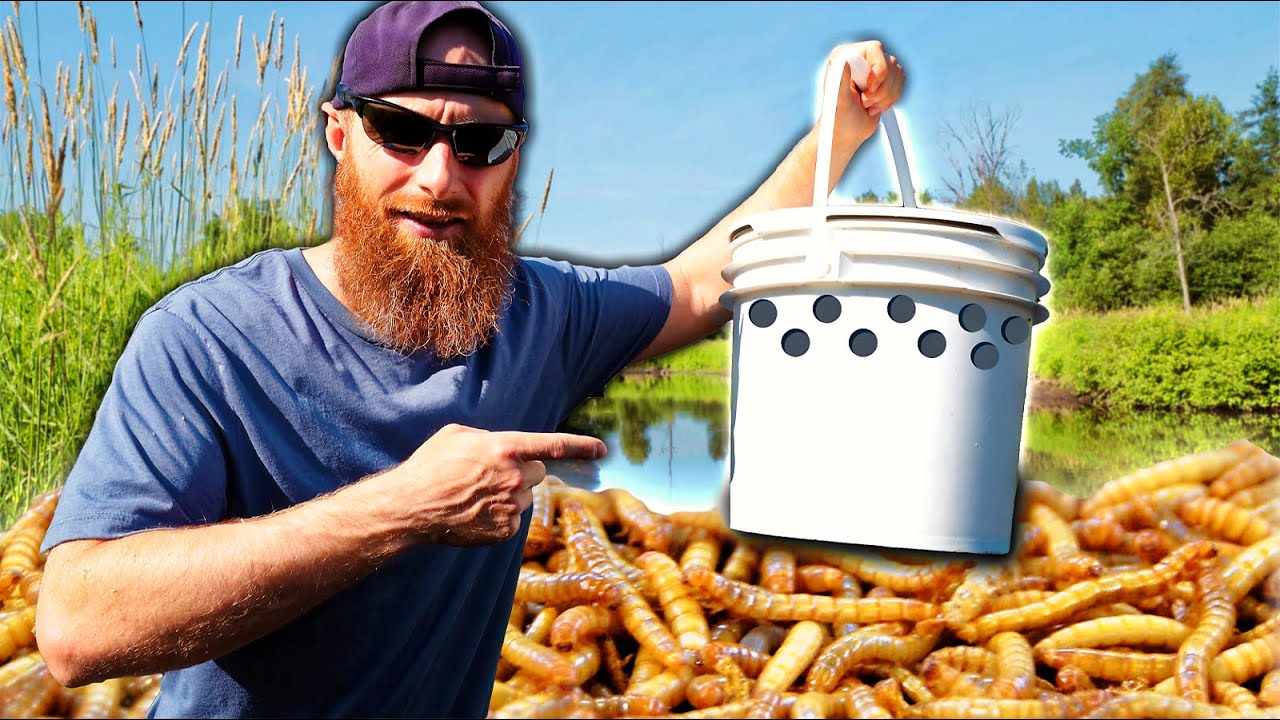
- Chris constructs a passive live-bait feeder from a drilled bucket, wire or rope rigging, and scavenged carrion, including roadkill meat.
- Fly larvae hatch inside the suspended, rotting carcass and drop through holes drilled in the bucket’s base directly into the water below.
- The steady trickle of falling maggots conditions wild fish to school beneath the feeder, letting Chris catch fish later with minimal effort and no traditional tackle.
The Build: Bucket, Wire, and Roadkill
The setup starts with a plastic bucket, its base perforated with a series of drill holes sized so fly larvae can wriggle through but the carcass itself stays put. Chris rigs the bucket with wire or rope so it can hang from a branch or a simple support directly over a stream or pond, then loads it with carrion he’s found at the roadside. The carcass sits and rots inside the container, exposed to the air enough for blowflies to find it and lay eggs.
It’s a deliberate departure from the more familiar bushcraft trick of stuffing leaves and rotten wood into a tree’s bark crevices and hoping insects show up. Instead of relying on ambient decomposition in a random hollow, Chris engineers the whole cycle — carcass, container, drainage holes, water below — into one deliberate mechanism aimed at a single output: bait that delivers itself.
From Rot to Rain: How the Feeder Actually Works
Once blowflies lay eggs on the exposed meat, the larvae hatch and begin feeding inside the bucket. As they grow and become mobile, they naturally migrate toward the drilled openings at the base, looking for somewhere to pupate or simply crawling free of the mass. That movement is the entire mechanism: gravity and the maggots’ own restlessness send them falling straight through the holes into the water underneath.
The result is a slow, steady drip of live protein hitting the surface below the bucket, day after day, without Chris doing anything after the initial setup. It’s the kind of low-input, high-yield system that defines survival engineering — set it, walk away, let biology do the labor.
An auto fish ‘vending machine’ — hang it, forget it, and let the maggots do the fishing for you.
Turning Falling Bait Into a Feeding Station
The real payoff isn’t the maggots themselves — it’s what they train the fish to do. Wild fish quickly key in on the consistent, localized food source dropping from directly beneath the bucket, and over time they begin schooling in that exact spot, waiting for the next larvae to fall. That’s the “vending machine” effect: instead of hunting for fish across a stretch of water, Chris concentrates them in one predictable location.
Once that pattern is established, catching becomes almost incidental. A survival angler can approach the same spot day after day and expect fish waiting there, whether the goal is a hook and improvised line or something even simpler. It’s the same resourceful mindset that runs through Chris’s other bushcraft builds — using what the landscape already provides rather than hauling in manufactured gear.
Superiority Over Foraged Maggots
Packing leaves into tree bark and hoping for insect activity is a passive gamble — it might produce bait, or it might not, and there’s no way to direct where those maggots end up. Chris’s drilled-bucket rig removes the guesswork. The carrion guarantees flies will come, the drilled base guarantees the larvae end up in the water instead of scattering into the bark, and the suspension point guarantees the whole system stays exactly where the fish will find it.
That kind of controlled improvisation is a hallmark of the survivalist niche Chris works in, the same territory covered by builds like an improvised shelter made from plastic wrap or a sandbag shelter built solo in the woods — take a material nobody would call “gear,” and force it to do a job that usually requires a hardware store.
Chris doesn’t say in this video how long a single load of carrion keeps the bucket productive before it needs replacing, but the logic of the system suggests the answer is simple: as long as flies keep finding the carcass, the vending machine keeps stocking itself.






Micro Tiny House: Final reveal of the tiny house I tried to build for under $4000 in 4 weeks
Modern Cave House is Man’s Life Long Dream – 5,700 sq ft!
DIY Giant Shower Makeover
ONE MORE TIME
30 Healthy Habit Hacks You Need To Know!