

 InfoSearched
Down a market road in Kano or Lagos, a muzzled hyena on a chain clears a path through the crowd — and the men leading it aren’t robbers, they’re salesmen.
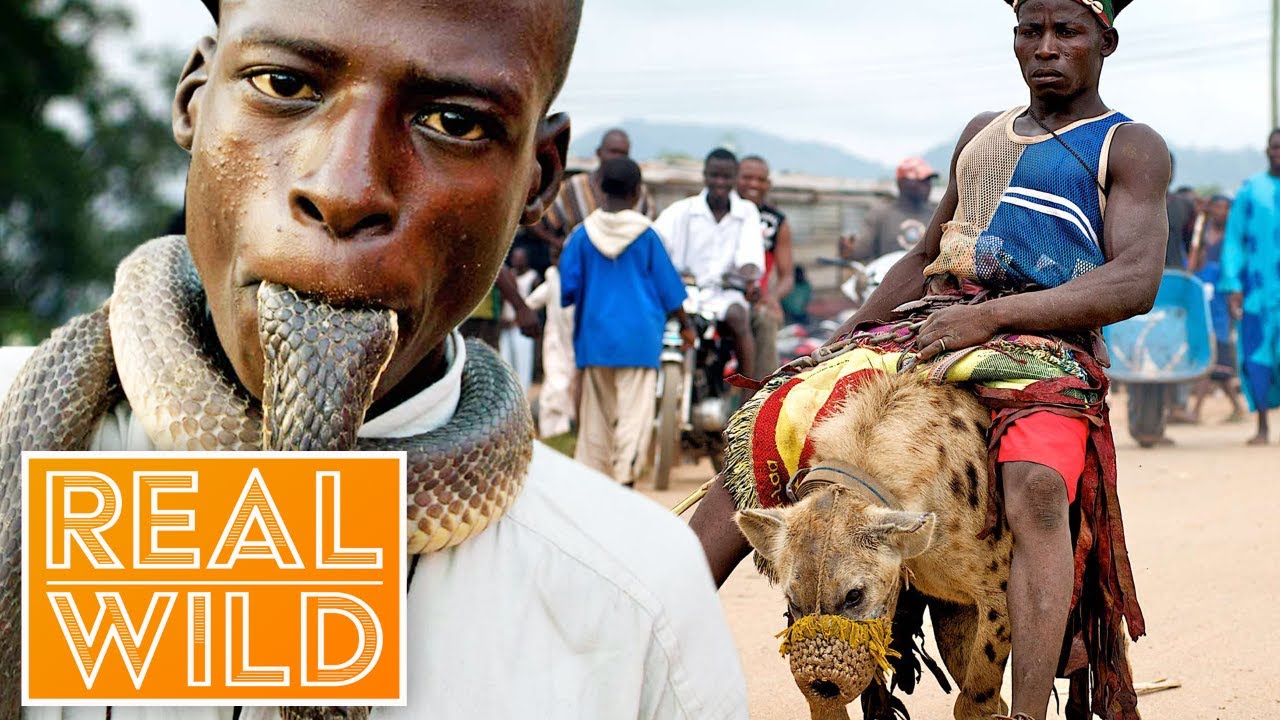
Nigeria’s Gadawan Kura, or “hyena guides,” have been misread for two decades as a criminal underworld, thanks to grainy early-2000s cell-phone photos that spread online claiming they were bank robbers and debt collectors terrorizing Lagos. They’re not. They’re an interrelated clan of itinerant performers from the country’s rural north who tour Abuja, Kano, and Lagos with spotted hyenas, rock pythons, and costumed baboons to draw a crowd — and sell herbal medicine once that crowd has gathered.
- The Gadawan Kura lead muzzled, chained hyenas alongside pythons and somersaulting baboons through Nigerian city markets, backed by drummers who summon huge crowds.
- The performances exist to market traditional herbal potions and charms; handlers work as farmers or scrap-metal dealers the rest of the year.
- The tradition passes down patrilineally, with children desensitized from infancy through herbal concoctions and early handling of cubs and snakes.
Viral Photo Creates False Legend
The “criminal gang” story traces back to blurry phone photos circulating in the early 2000s that showed men marching hyenas on chains through Lagos streets, captions attaching them to bank heists and debt collection. South African photographer Pieter Hugo went looking for the actual men behind those images between 2005 and 2007, producing the portrait series The Hyena & Other Men, which reframed them for international audiences as performers rather than enforcers. CCTV Africa’s 2013 Faces of Africa: The Hyena Men documentary went further, following the troupes on tour and documenting the trade that actually funds their travel.
What Hugo and later filmmakers found wasn’t intimidation for hire — it was theater built around real physical risk, staged to sell a product.
The Street Show As Marketing
The troupes arrive by chartered minibus, animals and all, and set up in open markets where drummers beat out rhythms loud enough to pull a crowd off the street. Handlers remove the muzzles, place a hand or head between a hyena’s jaws, and let the python coil across their shoulders while the baboon somersaults in costume — stunts meant to project invulnerability and, by extension, spiritual power. Onlookers who watch a man survive a hyena’s open mouth are the same onlookers who then buy the talismans and herbal remedies the handlers are actually there to sell.
The chains and the muzzles aren’t the act — the moment they come off is.
Off the road, the handlers aren’t performers at all. Between tours they return to farming or scrap-metal dealing, treating the hyena circuit as seasonal income layered on top of a marginal rural economy rather than a full-time criminal enterprise, as the early viral photos implied.
A Trade Passed Down, And A Codependence Debated
The Gadawan Kura inherit the practice patrilineally. Cubs and snakes are captured young, and children are conditioned from infancy with ritual herbal concoctions before they’re old enough to handle a chain themselves. Handlers describe the bond with their animals as one of genuine affection and mutual dependence — men and hyenas who’ve effectively grown up together.
International animal-welfare advocates see it differently, pointing to the iron chains, the muzzling, and the conditioning methods as straightforward cruelty regardless of how the handlers frame the relationship. Neither side is wrong about what they’re describing; they’re just weighing the same chain and muzzle against different scales — economic survival on one side, animal welfare on the other, with no resolution in sight for a trade that predates the phones that first made it famous online.
For a look at another tribe whose customs get flattened into internet myth long before anyone explains the reality behind them, this piece on a tribe accused of violating the laws of physics covers similar ground, and anyone drawn to the python draped over a handler’s shoulders in these markets should see this account of a python bite gone wrong for a sense of what’s actually at stake when the muzzle comes off.









Good Samaritans Get….? Chat with Rasta Mokko! How Ugly are Matthew’s Shoes??
Log Cabin TIMELAPSE Built By ONE MAN In The Forest
Harvesting Honey From A FLOW HIVE & Thoughts & Impressions of the Flow Hive
$12,000 HOUSE – One Man Renovation
Jim Norton and Joe Rogan Debate Bob Lazar’s Story