

 InfoSearched
One man, one canvas tent, and twelve straight months on a Swedish island with no grid to plug into.
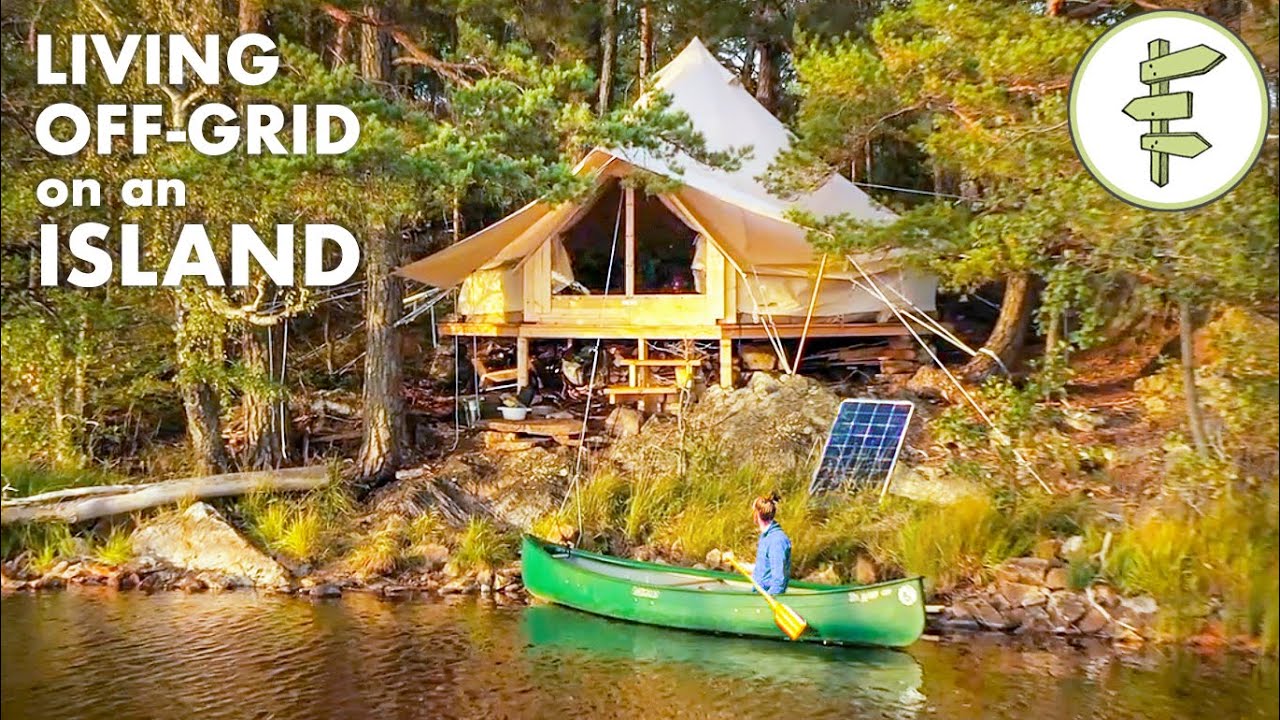
Jojo has spent the last year and a half living outside the conveniences most people take for granted, and the most recent stretch of that experiment — a full 12 consecutive months — has played out on an island in Sweden. His home is a 5-meter (16-foot) Sibley Bell canvas tent, pitched on a raised wooden platform to keep moisture out and the structure stable. In his latest video tour, he walks through exactly what it takes to keep that setup running through wind, snow, and isolation.
- Jojo has lived off-grid in a tent for 18 months total, with the last 12 spent continuously on a Swedish island.
- His camp runs on a wood-burning stove for heat, a multi-fuel camping stove for cooking, and a single solar panel wired to a car battery for charging devices — all water for dishes, laundry, and bathing comes from hand-carried buckets.
- Because the site isn’t food self-sufficient, he canoes across the lake once a week to reach the nearest grocery store.
The Tent That Became a House
The centerpiece of the whole operation is the Sibley Bell tent — a bell-shaped canvas design favored by long-term off-gridders for its steep sidewalls and center pole strength in wind. Jojo built a wooden platform underneath it rather than pitching directly on the ground, a decision that keeps the canvas floor dry and gives the structure a fixed foundation instead of shifting soil. Anyone weighing a similar setup can see how the category has evolved by checking out the best bug out tent on the market for comparison against what Jojo is actually living in day to day.
Heat, Power, and Water Without a Grid
Inside, a wood-burning stove handles the job that matters most in a Swedish winter: staying warm. For cooking, Jojo relies on a separate multi-fuel camping stove rather than tying meals to the wood stove’s schedule. His only electricity comes from a single solar panel charging a car battery — enough to keep phones and small electronics alive, but nothing close to a household supply. Water is the most manual part of the whole arrangement: every dish washed, every load of laundry, and every wash-up comes out of buckets he fills and hauls himself.
Building Comfort One Project at a Time
None of the tent’s furnishings came with the space — Jojo built them himself over the course of the year. A raised bed platform came first, followed by shelving, a small dining table, and eventually a couch, each one a DIY addition made from whatever the season and his skills allowed. It’s the same incremental logic behind a lot of off-grid builds featured elsewhere, including the kind of scratch-built shelter work seen in an off grid woodworking workshop log cabin project, where every piece of furniture has to be made on site rather than bought.
Twelve months, one tent, one lake — and a canoe is the only way off the island for groceries.
A Weekly Supply Run and a Daily Routine
The camp isn’t set up to feed itself, so once a week Jojo paddles his canoe across the lake to reach the nearest grocery store for fresh food. The rest of his time gets filled with canoeing the lake for its own sake, playing guitar and keyboard piano, and filming the footage that becomes his YouTube project, My Northern Story. In his tour, he’s candid about the parts that don’t make for pretty footage — brutal winter cold, lake winds strong enough to test the tent’s pitch, and the isolation of going a week at a time without seeing anyone outside the occasional supply run.
That weekly canoe crossing is the one fixed appointment in an otherwise unstructured life — miss it, and there’s no backup grocery run until the following week.






One Homestead Day – Day In The Life On Our Small Farm
Trying 26 UNEXPECTED DIY FOOD LIFE HACKS by 5 Minute Crafts
How To Turn Your Lawn Into A Vegetable Garden
The Famous “Turtleman” Episode
Occupy Tower: Living in the world’s tallest slum – the “Tower of David”