

 InfoSearched
A dense brick of dried meat and fat kept fur traders alive across an entire continent for a century.
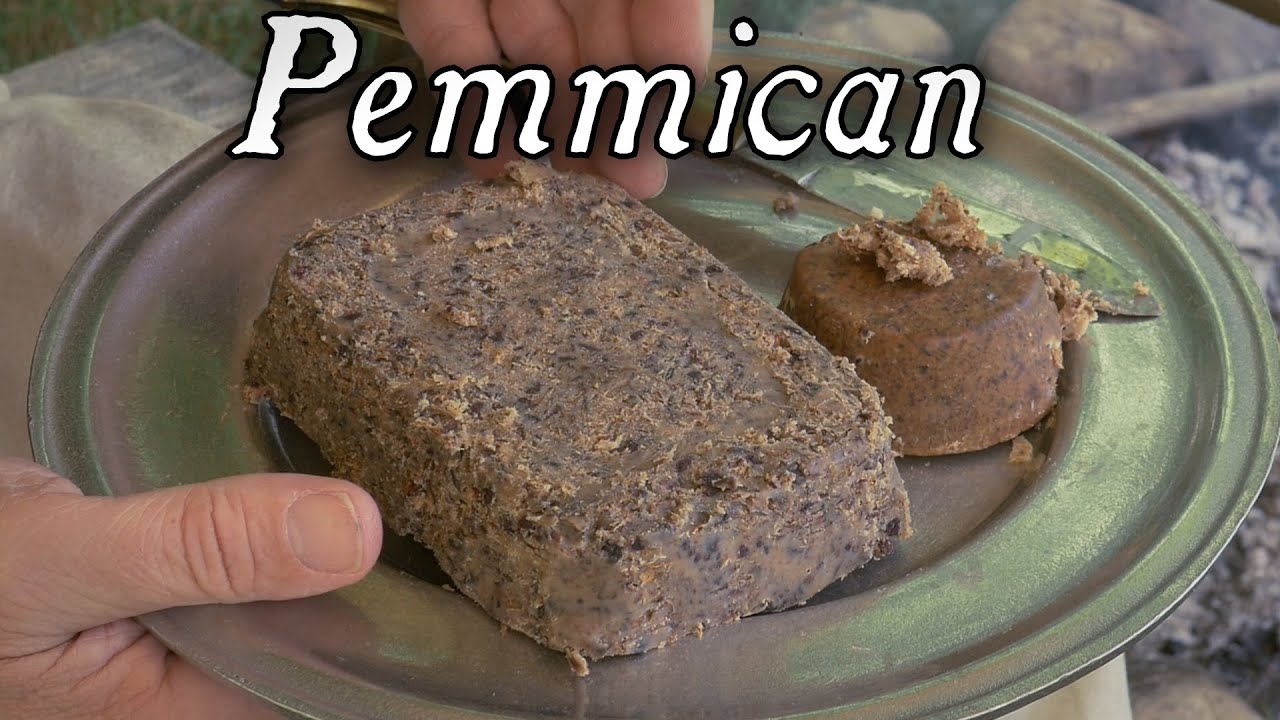
On his channel “18th Century Cooking with Jas Townsend and Son,” host Jon Townsend opens a new series with a single question: what did people eat when the nearest food source might be three weeks away by canoe? His answer is pemmican, the pounded-meat-and-fat ration that Indigenous peoples of North America developed and that fur traders, Canadian voyageurs, and Arctic explorers later depended on to move goods and survive winters where fresh food simply didn’t exist.
- Pemmican was historically made almost entirely from lean bison meat, with deer, elk, and moose used only as occasional substitutes.
- The Métis — descendants of French-Canadian voyageurs and Native American women — built a seasonal economy around biannual spring and fall buffalo hunts specifically to supply the trading networks’ demand for pemmican.
- Properly made pemmican, packed tightly into rawhide bags, was historically reported to last 10, 20, or even 30 years without spoiling.
Bison Established as Industry Standard
Townsend explains that while any lean red meat could theoretically work, the sheer scale of the fur trade meant bison was the only animal available in the quantities required. A single trading post might need hundreds of pounds of pemmican to get brigades of voyageurs through a season of paddling and portaging, and the northern plains herds were the only reliable source that large. Deer, elk, and moose show up in the historical record, but they were regional stopgaps, not the backbone of the supply chain.
That supply chain ran through the Métis, who organized large-scale communal bison hunts each spring and fall. The meat from those hunts didn’t just feed families — it fed an export economy, with pemmican traded by the ton to companies moving furs across the interior of the continent.
The Actual Recipe
Townsend breaks the process down into three steps that sound simple but took real labor. First, lean meat was dehydrated completely over sun or smoke racks until it turned brittle enough to snap. Second, the dried meat was pounded into a fine powder, essentially a meat flour. Third, that powder was blended with an equal part of melted tallow or rendered suet — kidney fat — while both were still warm enough to combine evenly.
Equal parts pounded dried meat and rendered fat, packed into a rawhide bag — and it could outlast the men who made it by decades.
The mixture was then packed tightly into rawhide bags, which excluded air and let the fat set into a hard, stable block. That density is exactly what made pemmican useless to spoilage — no moisture, no air pockets, just compressed protein and fat.
Seed Pemmican and Its Tradeoff
Some regional variations, known as “seed pemmican,” folded in dried chokecherries or other berries for flavor and a nutritional boost. Townsend flags the tradeoff plainly: berries introduced extra moisture and sugar into the mix, which cut into the shelf life that made plain pemmican so valuable in the first place. For a voyageur planning to be gone for months, that tradeoff mattered.
The same logic that governs pemmican’s fat-to-protein ratio shows up in plenty of other long-haul food and survival prep — anyone who’s watched a video on building a basket from pine needles or piecing together a shelter from raw materials knows the same rule applies: whatever you’re carrying into the woods has to earn its weight.
Setting Up the Series
Townsend frames this episode as the launchpad for a multi-part series, promising a follow-up on actually making pemmican in a modern kitchen and a later episode on rubaboo, the historic pemmican-based stew fur traders cooked up on the trail. It’s a format he’s used before with other frontier-era staples, and it fits the same practical, hands-on approach seen in projects like building shelter from improvised materials — take a piece of history, then actually rebuild it.
Next up in Townsend’s series is the kitchen demonstration itself — turning the theory of pounded meat and rendered suet into an actual batch, rawhide bag included.








How to Build Real Fully-Functional Jump Stilts From Scratch For Under $50!
3 PEOPLE LIVING IN A VAN | Van Life in Scotland
INCREDIBLE AND INGENIOUS Hidden Rooms AND SECRET Furniture
The Rise of Money Launderers on Snapchat and Instagram | Crimewave
Inmates Are Using VR For A Chance To Get Out Of Prison