

 InfoSearched
A backyard builder named Scott turned a single living tree into the centerpiece of a hobbit-hole retreat built almost entirely from other people’s leftovers.
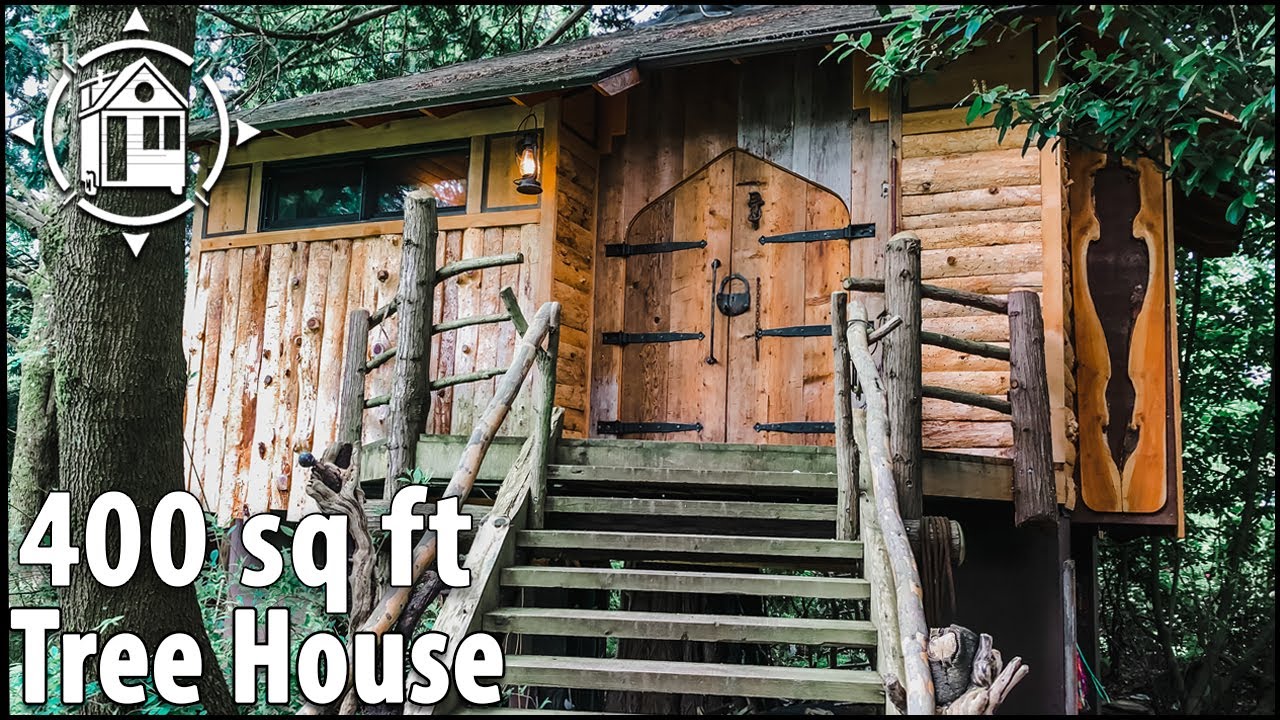
Jenna Spesard, the host behind the alternative-living channel Tiny House Giant Journey, took cameras inside a roughly 400-square-foot treehouse in “Magical TREE HOUSE for Adults! Looks Like a Hobbit Hole.” The structure was designed and built by a homeowner named Scott, who chose to build his retreat around a living tree trunk instead of drilling into it for support. The result reads less like a kid’s backyard fort and more like something out of Tolkien’s Shire, styled with earthy textures, salvaged wood, and a genuine sleeping setup for adults.
- Scott built the roughly 400-square-foot treehouse around a living tree rather than anchoring it with invasive drilling into the trunk.
- The structure relies heavily on salvaged materials, spare lumber, and reclaimed wood, including repurposed exterior paneling and a reused cedar trunk.
- Jenna Spesard toured the space for her channel Tiny House Giant Journey, which covers alternative and tiny-space living.
Building Around the Tree Instead of Through It
Most backyard treehouses lean on the tree as a structural anchor — bolts through the trunk, platforms bearing weight on limbs. Scott flipped that approach. Rather than drilling into the tree to hang the frame from it, he built the treehouse’s frame around the trunk, letting the living tree pass through the interior as a design feature rather than a load point. That choice keeps the tree healthier over the long run and gives the inside of the house an organic centerpiece that no amount of reclaimed lumber could fake.
It’s the kind of detail that separates a genuine DIY treehouse build from a novelty shed on stilts, and it’s the same low-impact instinct that shows up in other backyard tree builds featured on The Pinecone Treehouse: A Spectacular Tiny Home In The Trees, where builders similarly worked with the tree’s natural form instead of against it.
Reclaimed Wood, Salvaged Everything
Scott’s treehouse leans almost entirely on materials that had a previous life. Exterior wooden paneling, spare lumber left over from other jobs, and a repurposed cedar trunk all found their way into the build, giving the place a patched-together, storybook texture rather than a polished, big-box-store finish. That fits squarely into the DIY reclaimed-materials tradition that shows up across backyard treehouse projects nationwide.
Roughly 400 square feet, built without a single drill hole into the trunk holding it up.
Every piece Scott used carries its own backstory, and Spesard’s tour leans into that — this isn’t a kit house assembled from a catalog, it’s a structure stitched together from whatever wood had a second use left in it. That salvage-first mentality is documented well beyond this single build; it’s the same philosophy behind projects cataloged in 49 DIY Treehouses Made From Reclaimed Materials, where earthy, fairytale-style hobbit-hole aesthetics keep showing up as a recurring theme among backyard builders.
A Hobbit Hole Built for Grown-Ups to Actually Sleep In
What sets this treehouse apart from a novelty backyard fort is that it’s built for adults to use, not just admire. There’s a dedicated sleeping area inside, decorative touches tied to personal history, and enough square footage — around 400 feet — to function as a real overnight retreat rather than a glorified playhouse. Spesard’s channel, Tiny House Giant Journey, has built its audience around exactly this kind of space: small-footprint, high-character living that proves square footage isn’t the same thing as comfort.
Viewers curious about other backyard tree-based retreats built with the same overnight-stay mentality can find comparable projects in WE SLEPT IN A JUNGLE TREEHOUSE (overlooking an active volcano) and Luxury Eco Bush Retreat w Loft Bed & Lap Pool! – Australian Home Tour, both of which lean on the same low-impact, sustainable-build logic Scott used in his own backyard.
Scott’s treehouse doesn’t come with a brand name or a listing price — it’s a one-off, backyard-scale project built with whatever wood was on hand and a tree nobody wanted to hurt. That’s the whole pitch: no drilling, no catalog parts, just a hobbit hole grown up enough to sleep in.





Making a Spider Resin Shift Knob – Epoxy Resin Art
Building New York’s $200M Apartment
The Tragedy of John Jones | Sealed Forever in a Cave
How to Catch a Trout with a Mouse Trap (Ice Fishing)
I Built My House By Myself – 3 Year Timelapse – Off Grid – Debt Free