

 InfoSearched
Kara and Nate traded running water for a front-row seat to an erupting volcano.
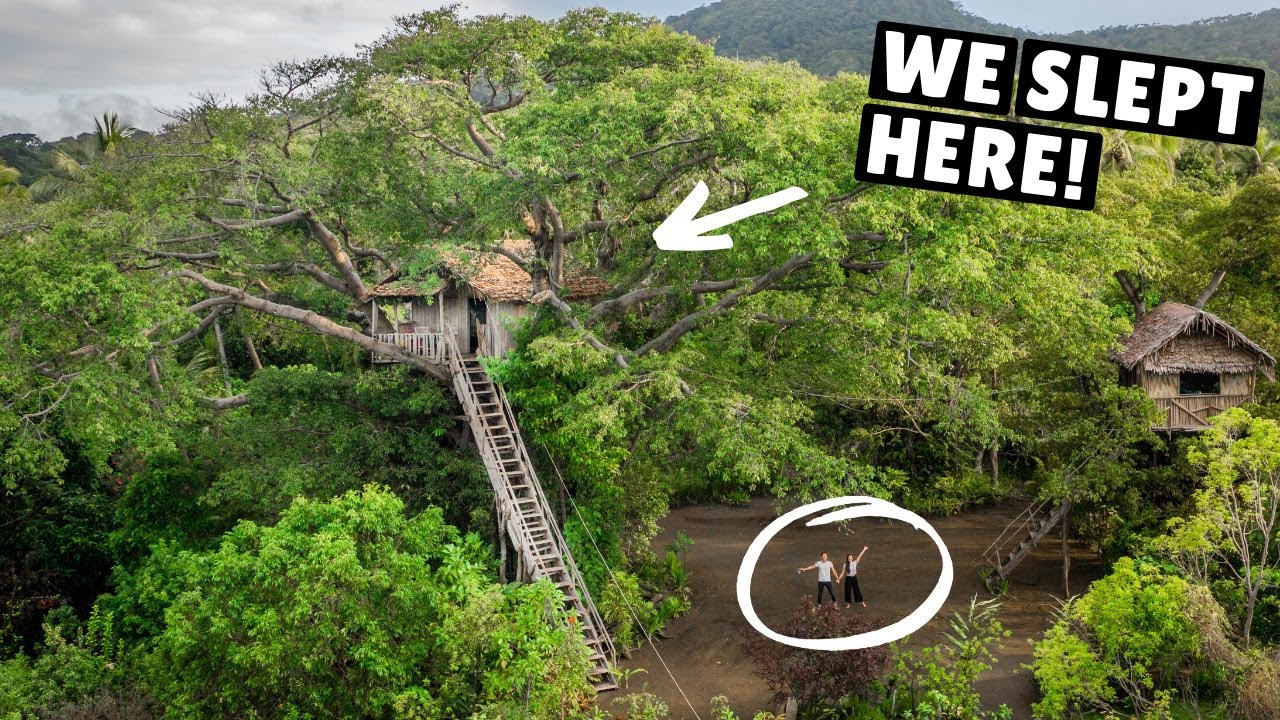
The South Pacific leg of their travel series took them to Tanna, a rugged island in Vanuatu, where the couple checked into a treehouse built into a banyan tree with a direct line of sight to Mount Yasur — one of the most consistently active volcanoes on Earth. There was no electricity, no tap water, and no cell signal, just jungle canopy, rumbling ash plumes, and three nights to figure out how to live without any of the comforts they were used to.
- Kara and Nate stayed three nights in a rustic treehouse built into a banyan tree on the island of Tanna, Vanuatu, as part of their South Pacific travel series.
- The treehouse looked directly out at Mount Yasur, an active stratovolcano known for continuous Strombolian eruptions.
- The accommodation had no electricity and no running tap water, making it entirely off-grid for the duration of their stay.
A Treehouse Built to Face a Volcano
Tanna’s Mount Yasur doesn’t erupt in rare, dramatic spurts — it erupts almost constantly, sending up ash and glowing debris in a steady rhythm that’s made it one of the most accessible active volcanoes in the world to observe up close. The treehouse Kara and Nate booked wasn’t just near it; it was positioned so that every window and platform framed the crater directly, turning the volcano into a constant backdrop rather than a distant landmark.
The structure itself was built from local timber lashed into the branches of a banyan tree, the kind of setup that trades polish for proximity to the jungle. It’s the same rustic-luxury logic behind builds like The Pinecone Treehouse, though on Tanna the comparison mostly ends there — this wasn’t designed for creature comforts, it was designed for a view nobody else on the island could offer.
Three Nights Without Power or Plumbing
No electricity meant no lights after dark beyond whatever the couple carried in, and no running tap water meant the basics of daily life — washing, drinking, cooking — all had to be improvised. It’s a stripped-down version of the off-grid setups documented elsewhere in their travels, closer in spirit to builds like the one behind an off-grid log cabin workshop than to any resort listing.
The treehouse sat facing Yasur with nothing between them and the crater but jungle canopy and three nights of no electricity, no running water, and a volcano that never stopped rumbling.
That kind of exposure is the whole point of the stop. Tanna isn’t a place tourists pass through for spa amenities — it’s a place people go specifically to sleep close enough to an active caldera to hear it work.
Watching Yasur Before the Climb
The treehouse functioned as their base camp ahead of a trek up to Yasur’s caldera rim, giving them days of watching the volcano’s ash plumes and glow from a fixed vantage point before making the climb itself. Waking up to a smoking crater for three straight mornings is a different experience than a single day-trip glimpse — it’s the kind of prolonged, unfiltered exposure to a live geological feature that few travel stops anywhere else can match.
It’s the same instinct that drives coverage of volcanic phenomena elsewhere in the region, like the unusual “lava eggs” that turned up near another active crater — travelers and cameras drawn to places where the ground itself is still doing something.
By the time they packed up to head toward the caldera rim, three nights of watching Yasur smoke and rumble from a banyan tree had already told them more about the volcano than the climb itself would confirm.






Inside The Rock’s $100 Million Dollar Mansions
It Started Out Great, But… Solo Beach Camping On An Uninhabited Island – Day 1
One Man’s Mission to Revive the Last Redwood Forests
Man Who Admits He’s Addicted To Heroin Shows What A Day In His Life Is Like
Man rides giant crocodiles even after they bit off his hand