

 InfoSearched
A couple with zero construction experience just framed an entire off-grid house in 10 days flat.
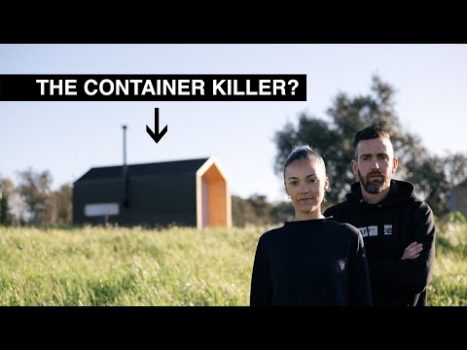
Modern House Cabin, the YouTube channel run by a couple who bought raw land in Portugal in late 2020, compressed their steel-framing build into a 7-minute, 18-second time-lapse titled “TIMELAPSE 5min. Metal House.” The footage tracks the structural skeleton of their off-grid cabin going up piece by piece, and the pitch running underneath it is blunt: light-gauge steel framing, they argue, is faster, cheaper, and easier to work with than the shipping-container builds that have dominated the off-grid and tiny-home scene for the past several years.
- The couple, with no prior construction or metalworking background, completed the full steel structure in 10 days.
- The main wall framing phase — the bulk of the visible time-lapse — took just 48 hours.
- The video frames prefabricated light-gauge steel studs as a “container house killer,” arguing they beat containers on weight, speed, cost, and customization.
Benefits of Steel Studs Over Containers
Shipping-container homes get attention for being tough and readily available, but they come with real headaches: cutting openings for windows and doors means grinding through corrugated steel that was engineered for structural rigidity, and every cut risks weakening the box. Modern House Cabin’s argument in the video is that light-gauge steel stud framing sidesteps that problem entirely. The studs come pre-cut and pre-punched, go up with screws rather than welds, and can be reconfigured on the fly without a torch or a crane.
That’s the core of the “container house killer” claim — not that steel framing is exotic technology, but that it’s the same logic contractors have used in commercial drywall construction for decades, applied to a self-build cabin. No heavy machinery, no structural compromise from hacking holes into a container’s skin, and a frame that’s light enough for two people with no trade experience to lift and screw together themselves.
The 10-Day Build, Broken Down
The time-lapse itself is the receipt. Ten days covers the entire steel structure of the home, and within that window the primary wall framing — arguably the most labor-intensive stretch of any framing job — only ate up 48 hours. For a couple building their own home for the first time on land they purchased in late 2020, that pace is the headline number the video keeps coming back to.
Steel framing, they argue, wins on being lighter, faster to erect, cheaper, and far easier to customize without heavy machinery.
The video also walks through the concrete costs and material choices behind the frame, along with the trade-offs viewers should weigh before copying the approach — things like thermal bridging and insulation strategy, which matter more with steel studs than with timber framing. It’s the same kind of cost-and-tradeoff breakdown you’d want before comparing this build to something like the kit-built home documented in We Built Our Dream Home, FROM A KIT!.
Part of a Bigger Off-Grid Build
This time-lapse is a chapter, not the whole story. Modern House Cabin has been documenting the entire process of turning raw Portuguese land into a livable, self-built, off-grid home, and the steel skeleton in this video is the stage that comes right after site prep and before anything resembling a finished interior. Anyone following along with other off-grid self-builders — like the workshop cabin project chronicled in Building an Off Grid Woodworking Workshop Log Cabin in the Forest — will recognize the appeal of watching amateurs figure out a structural system in real time instead of hiring it out.
The couple’s framing here isn’t a stunt; it’s the load-bearing skeleton their entire off-grid system — walls, roof, eventual insulation and cladding — has to hang off of. Get the studs wrong and everything downstream gets harder, which is exactly why the 48-hour wall-framing number matters as much as the 10-day total.
Next up in their build log is presumably the cladding and insulation phase, the part that actually determines whether steel framing holds its own against a container once winter weather and energy bills enter the picture — and that’s the chapter worth watching for if this one convinced you.







Mercedes-Benz F 015 Luxury in Motion
Alone in the Woods: The Legend of Cambo
I Only Ate Food That I Grew Or Foraged For One Year
Man Quits $80K Job to Work in Grocery Store Part Time
Bass Love Spiders!