

 InfoSearched
A hedge trimming a year ago just became a one-of-a-kind lamp on the lathe.
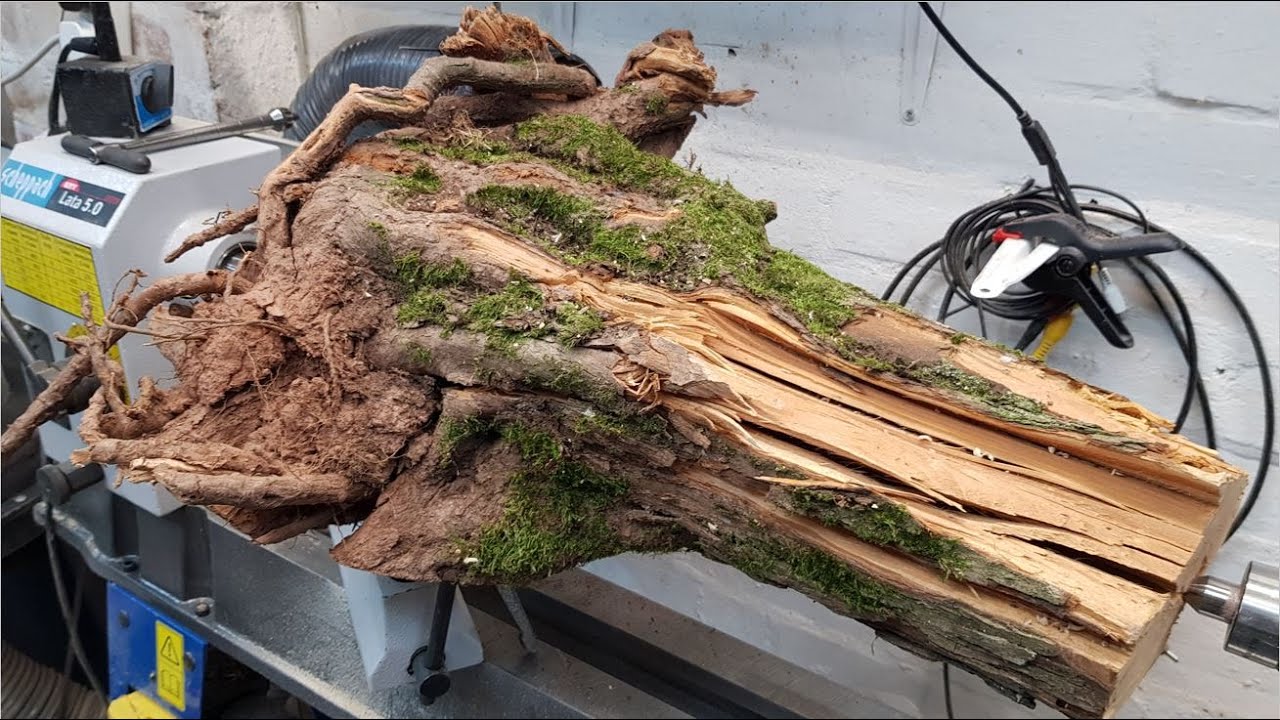
Woodturner Matt Jordan’s latest project, “Woodturning – Hawthorn Root Lamp,” turns a gnarled, moisture-soaked root into a hybrid resin-and-timber table lamp. The root came out of the ground during a hedge removal a year earlier, and getting it from firewood-adjacent scrap to a polished, glossy centerpiece took months of patience, an oven, and roughly 4 kilograms of clear resin.
- The hawthorn root was salvaged following a hedge removal a year prior to filming.
- Jordan’s lathe had a minimum base speed of 500 RPM, well above ideal for rough-turning an out-of-balance root blank.
- After oven-drying, the wood still needed four additional weeks to reach moisture equilibrium before it could be cast in roughly 4 kilograms of resin.
From Hedge Clearance to Workshop Blank
Most hawthorn roots end up on a bonfire pile, not a lathe. Jordan pulled this one aside when a hedge came out a year before the build, recognizing the kind of gnarled, irregular grain that makes a striking lamp base once it’s stabilized and cut open. The catch is that a freshly dug root is still loaded with internal moisture, and that moisture had to come out slowly or the whole piece risked cracking, warping, or ruining a resin bond down the line.
Rather than let the wood sit untouched for a year, Jordan rough-turned it early to establish basic contours while there was still enough material to work with safely. That decision set up the rest of the build, but it also created the trickiest few minutes of the entire project.
Fighting the Wobble at 500 RPM
An out-of-balance root blank on a spinning lathe is not a forgiving combination, and Jordan’s equipment made it worse: the lathe’s minimum base speed was 500 RPM, faster than ideal for roughing out a large, asymmetrical piece. He held that speed for only a few minutes while initial shaping knocked down the wobble, then gradually brought the speed up once the piece settled into something closer to round.
It was only a few minutes before it was balanced up enough to turn the speed up a little.
It’s the kind of moment that separates a woodturning video from a woodturning disaster video — a few careful minutes at an uncomfortable speed instead of forcing a slow setting that the lathe simply didn’t have.
The Long Dry Before the Pour
Rough turning is only half the moisture battle. To drive out what was left, Jordan baked the wood in an oven for several hours, accelerating a drying process that would otherwise take far longer. Even after that, the piece needed another four weeks resting before it reached true moisture equilibrium — the point at which the wood is stable enough to accept a resin pour without trapping moisture that could cloud, crack, or delaminate the cast later.
That kind of drying patience is common ground with other slow-build projects in the woodworking space, where the finished piece is really the last step in a long stabilization process rather than the main event.
Casting and the Final Turn
Once the root hit equilibrium, Jordan cast it in a mold using approximately 4 kilograms of resin, encasing the irregular root shape inside a clear cylinder. Back on the lathe, he turned the composite resin-and-wood blank down to its final profile, bored out the cavity needed for the lamp’s electrical fittings, and polished the resin to a high-gloss finish that lets the grain, natural voids, and twists of the hawthorn show straight through the casting.
The result is a lamp where the wood does the storytelling and the resin does the framing — every knot and gap in the root visible under a shell clear enough to read through.
Jordan’s channel has built a habit out of these slow-burn timber projects, and viewers who liked watching this root go from hedge scrap to a lit centerpiece will find the same patience-first approach in builds like his off-grid woodworking workshop log cabin and other from-scratch pieces in the start-to-finish project style he keeps returning to. The next root he saves off a hedge clearance is anyone’s guess, but if this one is any indication, it’ll spend a year drying before it ever sees a lathe.








Is War Good for The Economy?
Alone in the Woods — Solo Camping + Cooking Spicy Soup Over My Camp Stove
BIG SWORDFISH HEARTBREAK AND TRIUMPH -YouFishTV
How to make healthy eating unbelievably easy | Luke Durward | TEDxYorkU
This Arabian Dog is Fast Enough to Catch a Gazelle