

 InfoSearched
A wood-framed relic from 1822 sits on Grove Street with a bootlegger’s tunnel still running beneath its library floor.
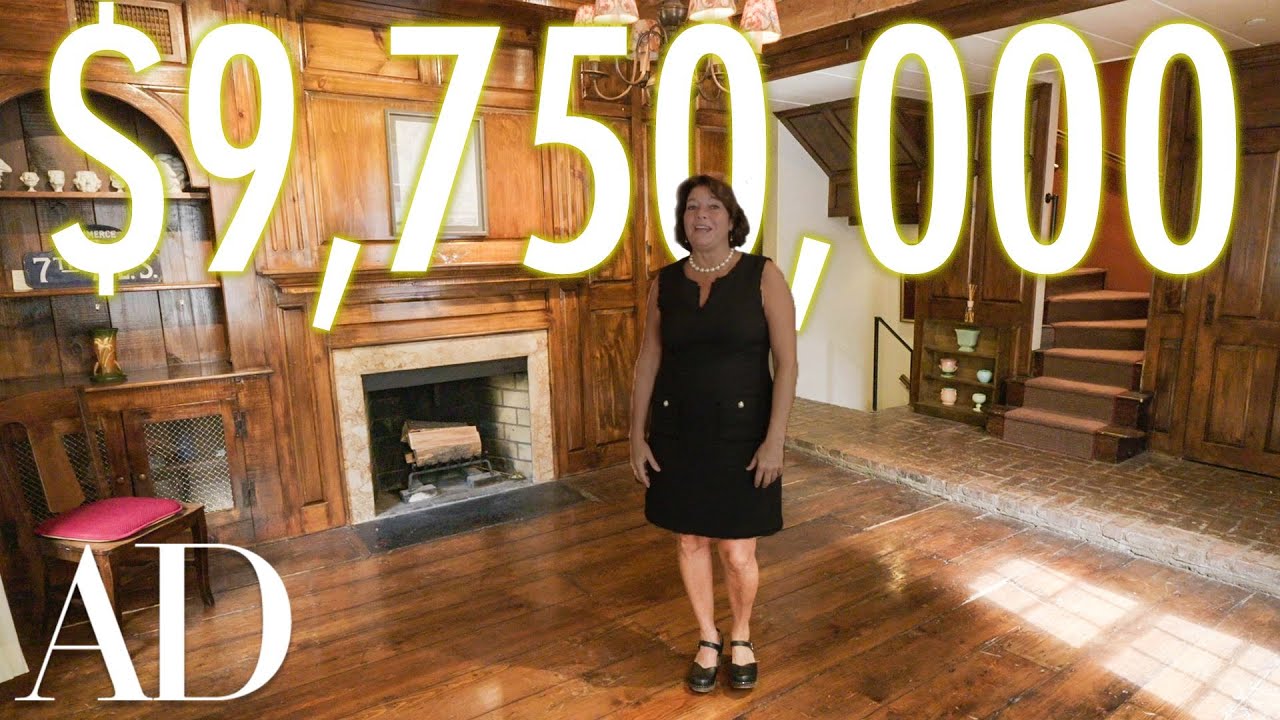
Architectural Digest’s “On the Market” series pulled up to 17 Grove Street in the West Village for this one, and the listing has more history packed into its walls than most museums. The four-bedroom clapboard house, paired with an attached rear structure at 100 Bedford Street, was built in 1822 by a window sash maker named William Hyde — making it the oldest clapboard residence in Greenwich Village. It’s on the market for $9.75 million, a price cut from its original $12 million ask in early 2019.
- Built in 1822 by William Hyde, 17 Grove Street is the oldest clapboard home in Greenwich Village and one of Manhattan’s few surviving wood-framed houses after 19th-century fire codes wiped most of them out.
- A remnant tunnel beneath the basement library once ran roughly 200 feet under Bedford Street — including under the building later used as the “Friends” apartment exterior — straight to Chumley’s speakeasy at 86 Bedford Street.
- Corcoran’s Jane Beal and team dropped the asking price from $12 million (early 2019) to $9.75 million by the time Architectural Digest toured it in late 2019.
A House That Outlived the Fires
Manhattan doesn’t have many wood houses left standing, and that’s by design. After a string of devastating 19th-century blazes, the city banned new wood-frame construction, which means anything built before those codes kicked in either got demolished, bricked over, or survived as a rare holdout. 17 Grove Street is one of the holdouts — a clapboard structure that has cycled through duty as a private residence, a workshop, a chopped-up multi-family building, and even a tearoom before landing back on the market as a single showpiece property.
Inside, the four-bedroom, three-bathroom layout keeps the bones intact: wide-pine plank flooring, rough-hewn exposed ceiling beams, and wood-burning fireplaces that look original because they are. The listing also flags retail and multi-unit potential, a nod to the building’s zoning flexibility and its decades of shape-shifting uses.
The Tunnel to Chumley’s
The real draw is underground. Beneath the basement library, a sealed-off passage is what’s left of a tunnel that, during Prohibition in the 1920s, ran roughly 200 feet under Bedford Street to 86 Bedford — the address of Chumley’s, one of the most storied speakeasies in New York history. Patrons and staff could move drink and people between the two buildings without ever stepping onto the street, which was the entire point of digging it in the first place.
The tunnel ran roughly 200 feet under Bedford Street — and under the building later famous as the “Friends” apartment exterior — straight to Chumley’s speakeasy.
Chumley’s wasn’t just a place to drink through the ban on alcohol; it was a literary hangout for Ernest Hemingway, F. Scott Fitzgerald, Willa Cather, and John Steinbeck. That pedigree is part of what makes the remnant tunnel at 17 Grove Street more than a real estate gimmick — it’s a physical link to one of the most mythologized bars in American letters.
Pricing and the Path to Listing
The property first hit the market in early 2019 at $12 million through Corcoran, with agent Jane Beal among those handling the listing. By late 2019, when Architectural Digest’s cameras came through for the “On the Market” segment, the price had been adjusted down to $9.75 million — a reflection of how even a one-of-a-kind Village property with a speakeasy tunnel still has to compete on price in a slow-moving luxury market.
For buyers browsing this kind of inventory, 17 Grove Street sits in the same conversation as other Manhattan showpieces covered in this sprawling eight-level Manhattan townhouse, though the pitch here isn’t square footage or skyline views — it’s the fact that no other listing in the city comes with a bootlegger’s escape route to a Hemingway haunt. That kind of provenance is rare even among New York’s biggest recent builds, including the city’s $200 million apartment project, which trades on scale rather than history.
Whether 17 Grove Street sells at $9.75 million or gets another price cut, the tunnel isn’t going anywhere — it’s sealed, remnant, and part of the deed now, not a functioning passage. The next chapter for the house depends less on Chumley’s ghosts and more on whether a buyer wants a 1822 clapboard survivor with retail zoning attached, which is a much smaller pool of shoppers than the address’s history might suggest.









30 medicinal plants the Native Americans used on a daily basis
Why Real Champagne Is So Expensive?
Inside Hong Kong’s cage homes
The Surprising Truth About Drugs At Psychedelic Festivals | Shambhala
Inside a $75M Lake Tahoe Mansion with a Hillside Tram | On the Market | Architectural Digest