

 InfoSearched
Bannock Preparation During Grid Failures
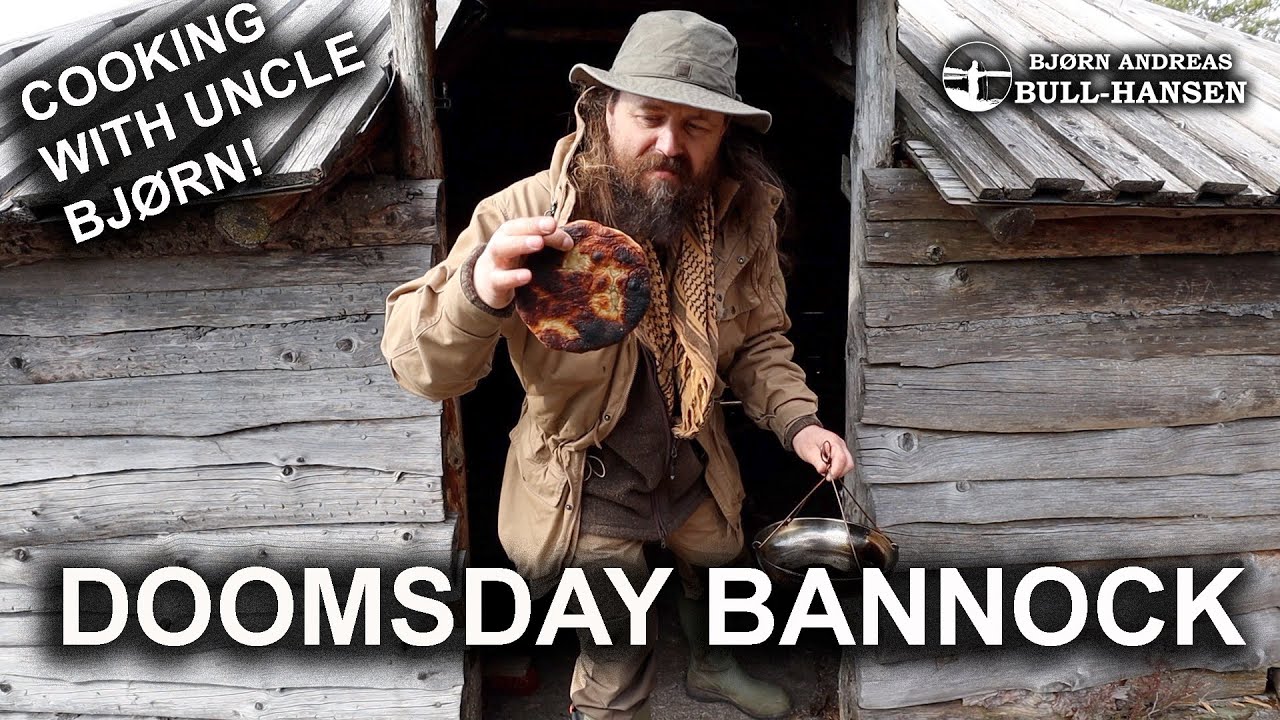
Bjørn Andreas Bull-Hansen isn’t trying to sell anyone on a bunker or a two-year supply of freeze-dried lasagna. In “Doomsday Bannock – how to make campfire bread,” the Norwegian novelist and bushcraft instructor strips survival cooking down to four pantry staples and an open flame, showing exactly how a skillet of coals turns flour and water into something that will actually keep a person fed. Bull-Hansen, best known for his historical “Jomsviking” novels and for a long-running catalog of wilderness-skills videos, treats bannock as the baseline test of whether someone can really cook off-grid.
- The recipe calls for roughly 2 cups of flour, 1 tablespoon of baking powder, 1/2 teaspoon of salt, 1/4 cup of vegetable oil, and about 3/4 cup of water worked into dough by hand — no yeast, no rise time.
- Bull-Hansen demonstrates the traditional skillet-over-coals method alongside two no-cookware alternatives: twisting the dough around a debarked stick or baking it flat on heated stones.
- The tutorial is framed specifically around “doomsday” prepping logic — shelf-stable ingredients and a technique that works when utilities and fresh food are gone.
Bannock as Essential Survival Bread
Bannock has been frontier food for centuries, carried by Scottish settlers and adapted across North America precisely because it asks so little of the cook. There’s no proofing, no starter to babysit, no oven required — just a binder, a leavening agent, and heat. Bull-Hansen leans into that history in the video, positioning the flatbread not as a novelty campfire snack but as the realistic answer to a genuine question: if the power’s out and the store shelves are empty, what can you actually bake with what’s already in the cupboard?
The dry-ingredient list matters as much as the cooking method. Flour, baking powder, and salt store for months without refrigeration, and the oil and water get added only when it’s time to cook — which means a prepper can keep the dry mix bagged and ready indefinitely. That’s the same logic that runs through a lot of the wider bushcraft and outdoors content built around minimal, shelf-stable kits rather than gear-heavy setups.
The Real Skill Is Fire Management, Not the Dough
Mixing bannock dough takes maybe two minutes. Cooking it correctly over an open flame is the part Bull-Hansen actually spends his time on, because campfire heat behaves nothing like a stovetop or an oven. Too much direct flame chars the outside while the center stays raw; too little heat and the bread never sets. He walks through managing a bed of glowing coals or embers rather than active flame, since consistent radiant heat is what allows the dough to cook through evenly in a skillet.
No yeast, no oven, no fresh ingredients — just flour, fat, and coals, cooked slow enough that the outside doesn’t burn before the inside sets.
That distinction is what separates a usable survival technique from a campfire party trick. Bull-Hansen’s stick-twist method — wrapping the thicker dough around a debarked branch and rotating it near the coals — solves the problem for anyone without a skillet at all, and the flat-stone method offers a third option when neither cookware nor a stick is practical. All three techniques rest on the same principle: steady, moderate heat over time beats a hot flame every time.
Built for Worst-Case Scenarios, Not Just Camping Trips
What separates this from a standard camping recipe video is the framing. Bull-Hansen isn’t cooking bannock for a weekend trip; he’s demonstrating a caloric-dense, low-effort food a household could fall back on if normal supply chains and utilities stop working. The ingredient list is deliberately generic and cheap — nothing requires refrigeration, nothing expires quickly, and nothing demands specialized equipment beyond a fire and, ideally, a skillet.
That practical, no-frills approach fits the same audience drawn to other hands-on wilderness cooking content, including outdoor meal videos like Lemon Crunchy Chicken cooked in the middle of the forest, where the point isn’t gourmet technique but proving a real meal is achievable with fire and basic tools. Bull-Hansen’s pitch is simpler still: bannock isn’t about flavor variations with herbs or dried fruit, it’s about reliably producing edible bread from ingredients that could sit in a pantry for a year.
The bar he sets is low on purpose — flour, baking powder, salt, oil, water, and a fire someone actually knows how to manage. That’s the whole skill set, and it’s exactly why he picked bannock as the demonstration instead of anything more complicated.






How Mexican Drug Cartels Make Billions
How a Woman Survived Falling 33,000 Feet Without a Parachute
Dan Price’s underground home, art & philosophy on $5,000/year
The Glass Artist Who Hides His Work All Around the World
Man Living Off-Grid in a Tent on an Island