

 InfoSearched
An undercover minister turned pod enforcer just crossed a line even A&E’s producers had to talk about.
Season 5 of 60 Days In sent Abner Garcia into Arizona’s Pinal County Jail with a specific mandate from Sheriff Mark Lamb’s office: figure out how gang politics actually work inside the pod. Garcia, an ex-convict and former gang member who now works as a state chaplain and minister, wasn’t supposed to just watch. By Episode 7, titled “Don’t Swing First,” he’d become something closer to a participant than an observer — and the fallout is still one of the show’s most argued-over moments.
- Abner Garcia, a former gang member turned chaplain, entered the Pinal County Jail undercover to assess gang dynamics for Sheriff Mark Lamb’s department.
- He integrated with the Latino inmates and took on the role of pod enforcer for the Chicanos rather than staying a passive observer.
- In Episode 7, “Don’t Swing First,” Abner slapped a younger inmate across the face after the inmate broke the pod’s internal rules.
Abner Assumes Role as Enforcer
Garcia’s background made him uniquely suited — and uniquely exposed — for this assignment. As a former gang member who’d since become a minister, he knew the unwritten rules of prison hierarchy well enough to slide into them convincingly. Instead of hovering on the margins the way some undercover participants do, he embedded himself with the Latino inmates and was accepted into the Chicano faction’s structure, eventually taking on responsibility for enforcing that group’s discipline inside the pod.
That position came with obligations. In jailhouse politics, a failure to police your own faction’s rule-breakers doesn’t just look weak — it can be read as an invitation for other groups to test the pod’s balance of power. When a younger inmate under Garcia’s faction violated the pod’s internal code, the expectation was that someone would answer for it, and quickly.
The Slap in “Don’t Swing First”
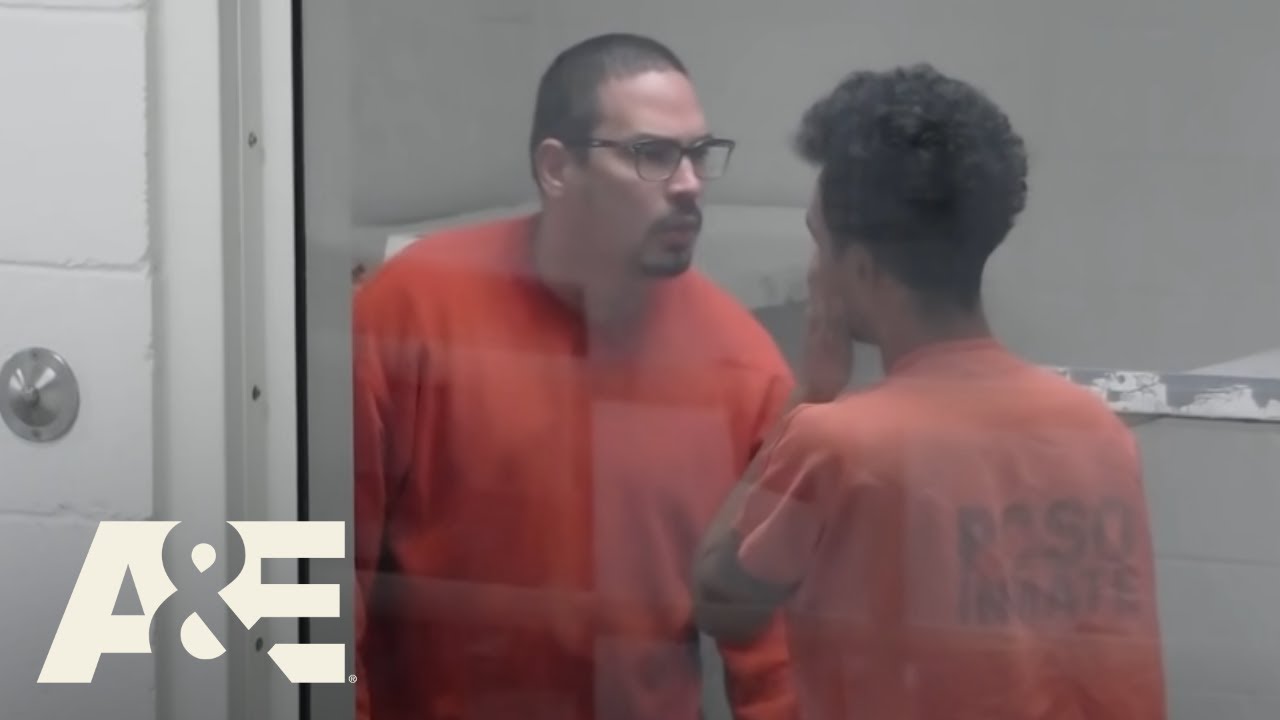
Garcia’s response was to confront the younger inmate directly and slap him across the face — a punishment meant to correct the infraction on the spot without escalating into the kind of organized, weapon-involved violence gang conflicts inside a jail can produce. The moment gave the episode its title and became the flashpoint clip that’s circulated ever since.
To maintain discipline and reinforce authority within the prison hierarchy without provoking broader racial conflict, Abner physically confronted the inmate and slapped him across the face as punishment.
For a series built around undercover civilians navigating real correctional facilities, the scene lands differently than a typical pod dust-up. Garcia wasn’t defending himself from a threat in the moment — he was administering discipline as the enforcer role required, which is exactly what turned a single slap into a debate about what the show should allow its participants to do.
The Debate Over Where the Show’s Line Should Be
Viewers split fast. Critics argued that letting an undercover participant commit battery and enforce inmate hierarchy — without facing charges or being pulled from the facility — crossed an ethical line no ratings should justify, especially inside a real jail with real inmates who didn’t sign up to be disciplined by a producer’s plant. Defenders countered that Garcia’s slap was a controlled, calculated move to protect his cover and head off something far worse; in a pod where gang leaders are watching for weakness, refusing to act could have triggered a much larger and more dangerous confrontation. 60 Days In has weathered similar arguments before, and this clip reopened all of them for a new round of viewers discovering the season-5 footage.
Programs like this sit alongside other unscripted looks at incarceration that have drawn their own scrutiny over what’s staged, what’s real, and what should never air — a tension explored in coverage like the case of the billionaire accused of a corrections officer’s death inside one of the world’s toughest prisons. Both stories, in different ways, ask how much of prison life a camera can capture before it starts changing what happens in front of it.
For a show that’s built five seasons on the premise of civilians surviving jail without getting caught, Abner Garcia’s slap is the moment that best captures the trade-off at its core — the closer these participants get to real credibility inside the pod, the closer they get to actually becoming what they’re pretending to be. That’s the tension A&E has leaned on since season one, and it’s the same one its documentary-style programming keeps returning to season after season.







One of the Oldest Ever People with Progeria (The Disorder That Makes You Age Rapidly)
Somalia’s (Only) Popular Drug
We Took a Tour of Prince’s Home Before Coronavirus Shut it Down
The Tragedy of John Jones | Sealed Forever in a Cave
Winter Ice Camping Overnight in -12 Degrees