


 InfoSearched
Nine out of ten men who show up for Delta Force selection never make it out of the woods.
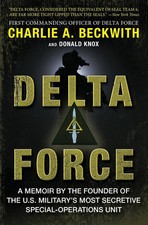
Inside America’s Secret Selection pulls back the curtain on how the U.S. Army builds 1st Special Forces Operational Detachment-Delta — the unit most people know as Delta Force, CAG, or simply “The Unit.” Run out of Fort Bragg under the Joint Special Operations Command, the process takes soldiers who are already Green Berets or Rangers and puts them through a monthlong gauntlet designed to break them before it ever teaches them anything.
- Selection and Assessment is held twice a year, often in the mountains around Camp Dawson, West Virginia, and is modeled directly on the British SAS course that Colonel Charles Beckwith adapted when he founded Delta.
- The centerpiece is “The Long Walk,” a roughly 40-mile solo land-navigation trek with a rucksack loaded past 45-50 pounds, run against time limits that candidates are never told.
- Attrition runs 80-90 percent before anyone even reaches the six-month Operators Training Course that follows.
Criteria for Candidate Selection
Delta doesn’t recruit off the street. Candidates come almost entirely from Army Special Forces and the 75th Ranger Regiment, with a smaller pipeline from other qualified personnel across the services. To even get an invite, a soldier typically needs to be an E-4 through E-8 enlisted or an O-3/O-4 officer, airborne qualified, and carrying a clean disciplinary record — no waivers for a soldier who’s had trouble with a commander or a court-martial on his file.
That screening matters because of what’s coming. The men who arrive in West Virginia are already some of the most physically capable soldiers in the Army — Green Berets and Rangers who’ve already survived their own brutal pipelines — and Selection still eats most of them alive.
The Long Walk and the Hidden Clock
The physical phase is built around solitary, unsupported land navigation over rugged terrain, and the psychological trick is that nobody tells candidates how much time they have. Cadre know the cutoffs; the men carrying the rucksacks do not. That uncertainty is deliberate — it’s meant to strip away pacing strategies and force each man to simply push until his body or his head gives out.
The Long Walk is the event that defines the course: close to 40 miles, alone, with more than 45 pounds on the back, across terrain that offers no shortcuts. It’s the same lineage of test that runs through British SAS selection, which Beckwith brought home and rebuilt for Delta after his own exchange tour with the regiment.
Somewhere between 80 and 90 percent of the men who start Selection never see the finish line.
The Board
Surviving the rucksack marches only gets a candidate to the next filter. Those who finish face a board of psychologists, instructors, and the unit commander, who dig into judgment, emotional stability, and integrity while the candidate is running on fumes. It’s less about whether he can walk 40 miles and more about whether he’ll tell the truth and make sound calls when he’s exhausted, scared, or both — the exact conditions he’ll operate under on a real target.
Building an Operator
Passing Selection doesn’t make anyone a Delta operator — it just earns a seat in the Operators Training Course, a roughly six-month program that turns assessed candidates into tier-one counterterrorism operators. OTC covers advanced marksmanship, close-quarters combat and room clearing, explosive breaching, tradecraft borrowed from the espionage world, and specialized driving skills, stacking skill on top of the endurance and judgment already proven in the mountains.
The result is a soldier built the same way the article on elite special forces units describes across the broader special operations community — except Delta’s version of that pipeline is deliberately the hardest and least advertised of them all. It’s a level up from the kind of physical standards tested in something like the Air Force Special Warfare PAST test, where the selection bar is already brutal before a candidate ever gets near a unit like Delta.
What sticks after watching the course laid out isn’t the marksmanship or the breaching drills — it’s that the Army decided the best way to find the right men was to make them walk 40 unmarked miles with a heavy pack and no idea if they were already out of time. Nine or ten out of every ten who try that walk go home. The one who doesn’t gets six more months before he’s even allowed to call himself an operator.






9 Survival Gardening Crops to Grow in a Post Apocalyptic World
Earth-cooled, shipping container underground CA home for 30K
Raw Run || Race Against the Storm
Couple Builds Tiny House for Only $420!
Cutting up a Lamborghini Aventador, Serious All Black Cullinan, AMG GTS Wheels