

 InfoSearched
Special forces recruiters lose roughly nine out of ten candidates before a single mission ever happens — and that’s the point.
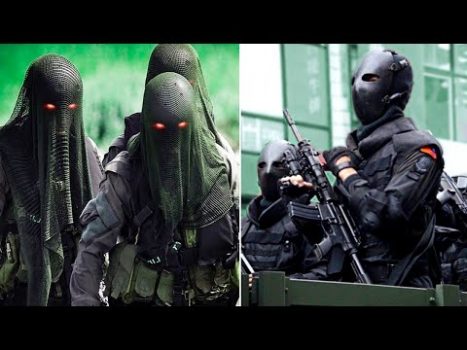
The video “Why You Never Mess With Elite Special Forces,” produced by Interesting Facts, tours the units that make conventional combat look almost quaint: Britain’s SAS and SBS, the US Navy SEALs and Delta Force, France’s GIGN, Israel’s Sayeret Matkal, and Pakistan’s Special Services Group. Each has built its reputation not through size but through selection courses designed to break most of the people who attempt them, and through operations that turned into textbook case studies for counter-terrorism forces worldwide.
- Israel’s Sayeret Matkal rescued 102 hostages from a hijacked airliner in Uganda during 1976’s Operation Entebbe — in under an hour.
- Delta Force operators captured Saddam Hussein during Operation Red Dawn in December 2003.
- Attrition rates across these units run 90 to 95 percent, including the SBS’s 25-mile Welsh mountain march completed in under 20 hours and the SSG’s 36-mile march finished in 12.
Selection Courses Built to Break You
The common thread across every unit in the video isn’t equipment — it’s the filtering process. Britain’s SBS puts candidates through weeks in the Welsh mountains before demanding a 25-mile endurance march completed in under 20 hours, carrying full kit over terrain that has ended careers for less prepared soldiers. Pakistan’s SSG runs its own version at 36 miles in 12 hours, a pace that leaves little margin for injury or hesitation.
American viewers will recognize the US Navy SEALs’ Basic Underwater Demolition/SEAL screening, better known as BUD/S, which has become shorthand for physical suffering in military culture — cold water, sleep deprivation, and instructors actively looking for reasons to ring the bell. Readers who want a taste of what adjacent selection standards look like can see it firsthand in an attempt at the Air Force Special Warfare PAST test, which mirrors the same brutal baseline these programs use to weed out all but a small fraction of applicants.
Operations That Built the Legend
Reputation in this world isn’t inherited — it’s earned in specific missions that get studied for decades afterward. Israel’s Sayeret Matkal delivered the standard against which every hostage-rescue unit measures itself: pulling 102 passengers off a hijacked Air France flight at Entebbe airport in Uganda in 1976, completing the assault and extraction in under 60 minutes against a numerically superior hostile force.
102 hostages freed in under an hour — the Entebbe raid remains the benchmark every hostage-rescue unit still trains against.
Delta Force added its own chapter in December 2003, when Operation Red Dawn located and captured Saddam Hussein hiding in a hole near ad-Dawr, Iraq — a manhunt that closed out one of the most searched-for fugitives in modern military history. France’s GIGN built its own reputation differently, through repeated precision work during aircraft hijackings and terror sieges, relying on specialized sidearms and close-range accuracy rather than overwhelming firepower.
Training for a Fight That Never Feels Fair
What separates these units in practice is how far their training goes beyond fitness. Close-quarters battle drills, HALO — high-altitude, low-opening — parachute insertions, and maritime combat diving are standard curriculum, not specialty add-ons. Perhaps the starkest detail in the video involves live-fire hostage simulations, in which operators fire real ammunition inches from teammates playing the role of hostages, a drill that exists purely to make split-second precision automatic under real stress.
That standard of lethality is deliberate. The goal isn’t to win a fair fight — it’s to make sure the fight is never fair to begin with, whether that’s a barricaded hijacker, a compound raid, or the kind of manhunt that closed out Operation Red Dawn. Units like Delta Force and the SAS have applied that same doctrine in modern theaters, echoing tactics detailed in coverage of the US-led coalition’s fight against ISIS and the broader special-operations footprint described in reporting on the most secretive unit in the United States.
None of these units publish their roster or their weekly training schedule, and that’s by design — the SSG, GIGN, and Sayeret Matkal all guard operational details as tightly as the SEALs and Delta Force do. What gets out is usually the after-action story: Entebbe in 1976, Red Dawn in 2003, and a training pipeline that still fails nine or ten candidates out of every ten who show up to try it.









FASHION TRENDS FALL-WINTER 2019-2020 & how to wear them ǀ Justine Leconte
Inside a $7.5 Million Dollar Lake Las Vegas Modern Mansion!
The Deepest Dive in Antarctica Reveals a Sea Floor Teeming With Life
Inside Aaron Paul’s Rustic Riverside Home In Idaho
HOW MUCH does a RECREATION POND COST?? Swimming in a Natural Pool