

 InfoSearched
A 19-year-old’s diving accident became the starting point for one of the most direct brain-to-muscle connections ever built.
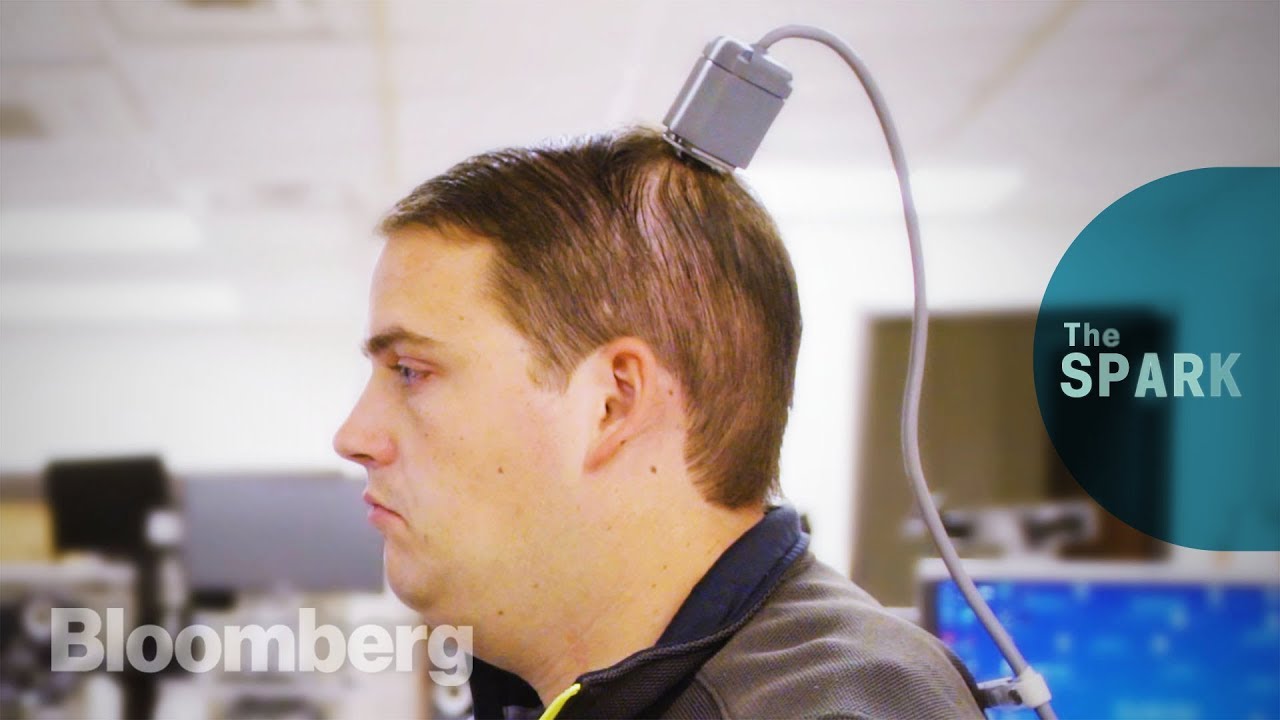
Ian Burkhart broke his neck in a diving accident in 2010, a C5–C6 spinal cord injury that left him paralyzed from the chest down with no arm or hand function below the elbows. Four years later, he became the first participant in a clinical study testing NeuroLife, an experimental neural bypass system developed jointly by Battelle and The Ohio State University Wexner Medical Center. The system doesn’t repair his spinal cord — it routes around it entirely, reading his brain’s intentions and firing the muscles in his forearm directly.
- In 2014, neurosurgeon Dr. Ali Rezai implanted a 96-electrode microchip array onto the motor cortex of Burkhart’s brain, feeding real-time neural signals through a skull-mounted port into a computer.
- Machine learning algorithms built by a team led by Battelle’s Chad Bouton decode those signals and send them to a custom neuromuscular stimulation sleeve on Burkhart’s forearm, activating his paralyzed muscles directly.
- After hundreds of laboratory sessions, Burkhart became the first person to restore voluntary movement to a paralyzed limb using an implanted brain-computer interface neuroprosthetic — enough control to open and close his hand, pour from a bottle, stir a drink, and play Guitar Hero.
Bypass technology functional mechanics
NeuroLife’s chain of command runs brain to chip to computer to sleeve. The implanted array sits on the motor cortex — the strip of brain tissue that fires when someone intends to move a hand — and picks up the electrical chatter from those neurons. That raw signal travels through a port mounted on Burkhart’s skull into a nearby computer, where Bouton’s decoding software translates the pattern into a specific movement command. The computer then sends that command to the neuromuscular sleeve wrapped around his forearm, which delivers targeted electrical stimulation to the exact muscles needed, skipping the damaged spinal cord altogether.
It’s the same basic principle behind any brain-computer interface: capture intent, decode it, act on it. What makes NeuroLife notable is that the “acting on it” step doesn’t move a cursor or a robotic arm — it moves Burkhart’s own hand, using his own muscles.
Burkhart core operational capabilities
The tasks aren’t party tricks. Grasping a bottle, pouring liquid without spilling it, stirring with a stick, working a card swipe — each demands the kind of fine motor sequencing that’s normally invisible because able-bodied hands do it without thinking. Burkhart had to relearn it from scratch, session after session in Battelle’s lab, building up the repetition needed for the algorithm to reliably match his intent to the right muscle activation.
He became the first person to restore voluntary movement to a paralyzed limb using an implanted brain-computer interface neuroprosthetic.
Guitar Hero made the point in a way a physical therapy chart never could — a paralyzed man hitting timed button presses on a plastic guitar, controlled entirely by a chip on his motor cortex. It’s the kind of demonstration that turns a research milestone into something anyone can immediately understand, in the same way viewers are drawn to hands-on breakdowns of new hardware in our Jetson One launch coverage.
The Lab-to-Home Problem
The catch, at the time, was the wiring. NeuroLife’s setup ran through a hard connection from the skull port to a lab computer, meaning every session happened inside Battelle’s facility under researcher supervision. That’s fine for proving the concept works; it’s not a system someone can use to pour their own coffee at home. Researchers said their next target was pushing the platform toward a wireless, at-home configuration that people with severe paralysis could operate independently, without a lab full of equipment standing between intention and movement.
Getting there means shrinking and untethering hardware that currently depends on a fixed connection, while keeping the decoding fast and accurate enough to work outside a controlled lab environment — the kind of engineering challenge that echoes the incremental, unglamorous work covered in our documentaries coverage of long-running research projects.
Burkhart’s involvement started as one test subject in one lab, but the goal was never to stop there — it was to prove the concept solidly enough that going wireless, and eventually getting the sleeve and the decoding software out of Battelle’s building and into someone’s actual living room, was the next real step rather than a hypothetical one.






Moose are Absolute Units
15 RAREST and FREAKY Snakes
Inside Hong Kong’s cage homes
The Crazy Secrets of the Cashew (Why Cashews Are Never Sold in Their Shells)
Mexico’s Cartels Are Deadlier Than Ever Despite the Pandemic