

 InfoSearched
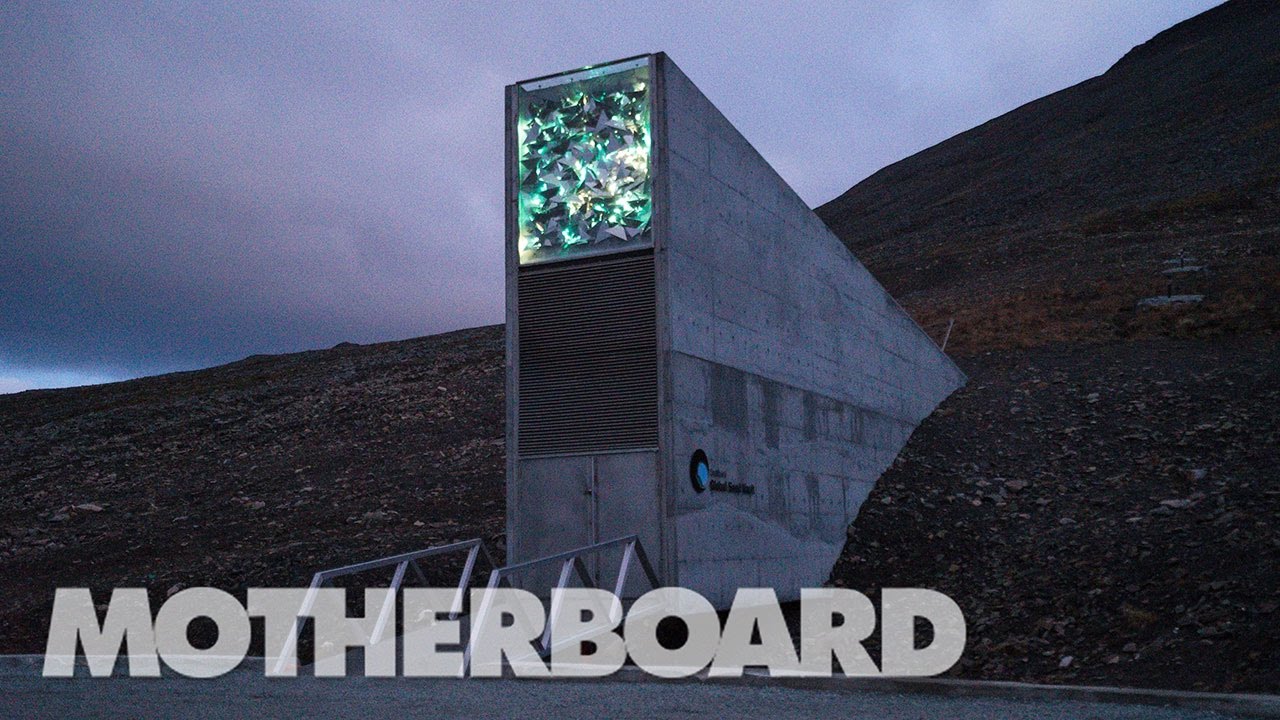
Deep inside a Norwegian mountain, 130 feet of permafrost stands between the world’s crops and extinction.
Motherboard correspondent Ben Makuch travels to Svalbard, the remote Norwegian archipelago sitting roughly halfway between the mainland and the North Pole, to get inside the Svalbard Global Seed Vault — the facility most people know by its nickname, the “Doomsday Vault.” Dug more than 100 meters into the rock of Platåberget mountain outside Longyearbyen, it’s built as the ultimate backup plan for global agriculture, not a museum piece. The documentary walks through how the vault actually works, who runs it, and the one time it’s already been used for real.
- The vault, opened by the Norwegian government in February 2008, holds three chambers kept at a constant −18°C (−0.4°F) with room for up to 4.5 million crop varieties — an estimated 2.25 billion individual seeds.
- It’s run jointly by Norway’s Ministry of Agriculture and Food, the Nordic Genetic Resource Centre (NordGen), and the Global Crop Diversity Trust, founded by agricultural scientist Cary Fowler.
- In 2015, researchers from the International Center for Agricultural Research in the Dry Areas (ICARDA) made the vault’s first-ever withdrawal, pulling seed samples to rebuild their genebank after their original collection in Aleppo, Syria, was compromised by the civil war.
A Backup for the World’s Genebanks
The seed vault exists because the more than 1,700 regional genebanks scattered across the planet are themselves vulnerable — to war, fire, funding cuts, equipment failure, and increasingly, climate change. Svalbard was chosen specifically because its geology and geopolitics make it about as stable a location as exists on Earth. Makuch’s reporting frames the site less as a doomsday bunker for the end of the world and more as an insurance policy against the much smaller, much more common disasters that wipe out crop diversity every year.
That distinction matters. The facility isn’t stocked with rations for survivors; it’s stocked with genetic material — the raw diversity plant breeders need to develop varieties that can handle drought, disease, or a changing climate. Losing a regional genebank’s collection means losing decades, sometimes centuries, of accumulated crop traits that can’t simply be recreated.
Inside the Chambers
Every sample that reaches Svalbard travels in vacuum-sealed, four-ply foil packets, packed into standardized crates and scanned on arrival at Svalbard Airport before being trucked to the vault entrance. The seeds remain the legal property of the depositing genebank the entire time — Svalbard operates on what’s called a “black box” system, meaning the facility stores the material but never opens, tests, or claims ownership of it. Depositors alone decide who can access their samples and when.
Three chambers, −18°C, room for 4.5 million crop varieties — and until 2015, not one of them had ever needed to be opened for a withdrawal.
That system is what made the 2015 ICARDA withdrawal notable. It wasn’t a hypothetical stress test — it was Aleppo’s genebank, one of the most important repositories for wheat, barley, and legume diversity in the Middle East, effectively rescued mid-crisis because duplicate samples had already been sitting frozen in Norway.
The Significance of Longyearbyen
Svalbard’s remoteness is the whole point. The archipelago sits far enough north that it draws visitors curious about the edge of the map as much as the vault itself — it’s one of the reasons Longyearbyen shows up on lists of unusual places travelers can reach without the usual entry hurdles, much like the remote visa-free island at the top of the world. But for the Global Crop Diversity Trust and NordGen, the appeal isn’t tourism — it’s permafrost, political stability, and distance from almost anything that could threaten the site at once.
Makuch’s piece, part of Motherboard’s broader run of on-the-ground documentary reporting, spends time with the people who actually manage the deposits rather than treating the vault as a curiosity. That approach is consistent with the outlet’s other documentary work — going past the “doomsday” headline to show the day-to-day mechanics of a facility built to outlast the people who designed it.
Since ICARDA’s 2015 withdrawal, the vault’s role as an active insurance system rather than a sealed monument has only become more central to how genebanks around the world think about redundancy — and Svalbard’s chambers, still running at a steady −18°C inside Platåberget, are built to keep taking deposits for as long as anyone’s still growing crops to protect.



Tears For Fears – Everybody Wants To Rule The World – Solo Acoustic Guitar
Happier than Billionaires in Costa Rica | EX-PATS™ Ep. 12 Full | Reserve Channel
Simple Tricks to Keep Your Garden PEST FREE!
Flying Foxes Vs Freshwater Crocodile | Lands of the Monsoon
Shotgun Balloon Drop