

 InfoSearched
Five shelters, built from nothing but what’s already on the forest floor.
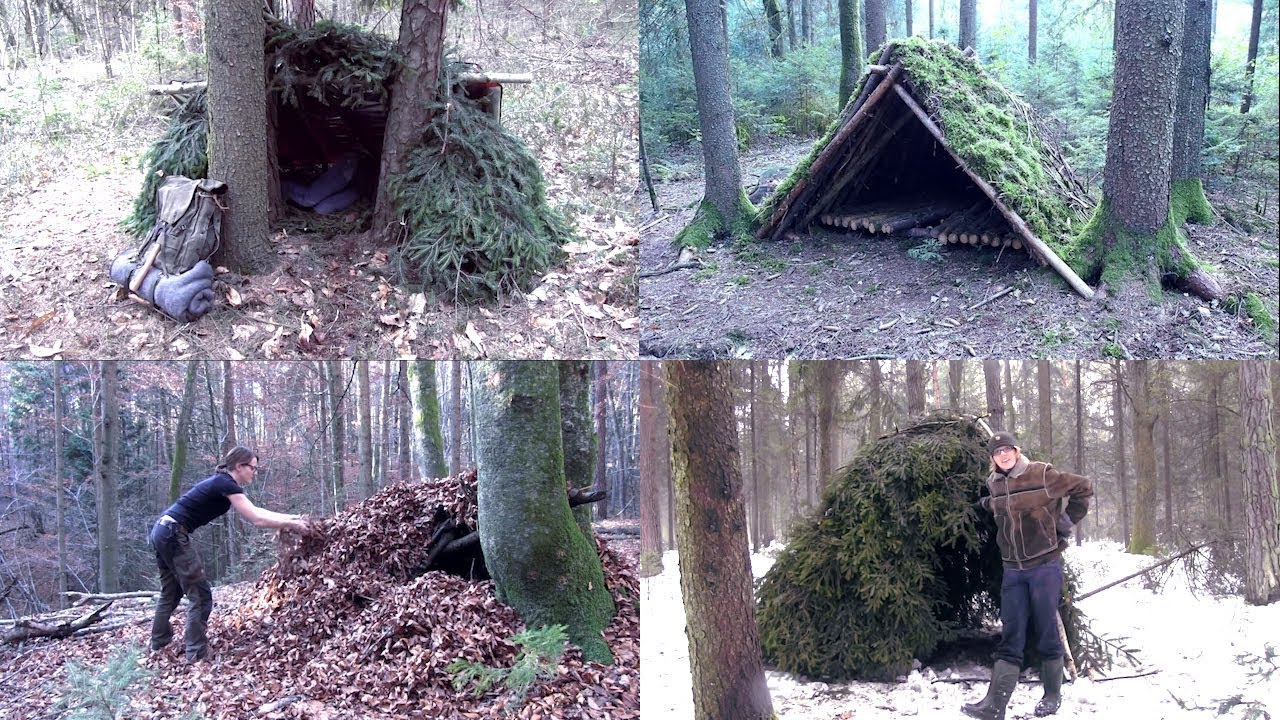
Survival Lilly doesn’t show up with a backpack full of gear for this one. The Austrian bushcrafter and self-taught survivalist works with branches, leaf litter, and a single tarp to demonstrate five shelters she considers non-negotiable knowledge for anyone spending real time in the woods. Filmed entirely in natural woodland, “5 Survival Shelters Everyone Should Know” walks through builds meant to answer very different problems — driving rain, howling wind, and temperatures that drop hard once the sun goes down.
- Austrian bushcrafter Survival Lilly filmed the tutorial in natural woodland, demonstrating five emergency shelter builds using materials found on-site.
- The A-frame shelter forms an inverted “V” from ridgepoles and branches or a tarp, designed specifically to shed precipitation.
- The debris hut relies on piled leaf litter, twigs, and moss packed thick around a frame to trap body heat through insulation.
The A-Frame and the Debris Hut
Lilly opens with the A-frame, the shelter most bushcrafters learn first because it’s forgiving and fast. Two slanted walls meet at a ridge to form that inverted “V,” with the front and back closed off to seal the space — built from lashed branches and foliage if that’s all you’ve got, or thrown together in minutes with a tarp if you’re carrying one. Either way, the pitch does the work: rain runs off instead of pooling.
The debris hut is the slower build but the warmer one. A basic framework of branches gets buried under a thick layer of leaves, grass, and twigs until the insulation itself becomes the shelter. Lilly’s build leans on this one specifically for cold-weather situations, where the difference between surviving the night and not surviving it often comes down to how much dead air you can trap between yourself and the outside temperature.
The debris hut is great for cold weather survival situations — the insulation is what keeps you alive, not the frame.
Reading Wind, Rain, and Cold Before You Build
The other three shelters in the lineup exist because no single design handles everything. The lean-to goes up fast against a tree trunk — lean a large branch or log at an angle, layer leaves and branches over the top, and let the trunk itself block wind and driving rain from one side. It’s the shelter Lilly reaches for when conditions are ugly but time is short.
A tarp shelter solves a different problem: speed and versatility with almost zero natural-material dependency. Suspended between two trees or poles and staked or weighted down at the corners, it goes up in minutes and holds against wind and rain about as well as anything on this list — which is part of why a solid tarp setup shows up again in builds like the best bug-out tent comparisons circulating in the same bushcraft circles. For genuine cold-weather extremes, Lilly’s fifth option is the snow cave — dug directly into a snowbank or drift, with the surrounding snowpack itself acting as the insulation while a small entrance and carved sleeping area keep body heat contained.
Materials Over Gear
What ties the five builds together is the deliberate absence of specialized equipment. Lilly’s approach mirrors the same philosophy seen in other bushcraft demonstrations, like the bushcraft tent built from plastic wrap, where the skill is in reading what the environment already provides rather than what’s packed in. Ridgepoles, foliage, moss, and leaf litter aren’t backup options here — they’re the actual materials of construction, and the tutorial treats ground insulation as just as critical as whatever roof goes over your head.
That emphasis on insulating from frozen or damp ground runs through all five builds, whether it’s the packed debris of the debris hut or the raised, tarp-covered floor of the A-frame. Lilly frames shelter-building less as a single technique to memorize and more as a decision tree: assess the weather threat first, then pick the design that answers it.
The snow cave stays the one she flags as the most physically demanding of the five — digging takes energy a cold, tired person doesn’t always have to spare — but it’s also the build she credits with the best odds once temperatures turn genuinely extreme, which is exactly the kind of trade-off the whole tutorial is built around.








Inside the Strange, Psychic World of Indigo Children
How to Get Away with Stealing
DIY Giant Shower Makeover
The Mennonites – a trip back in time
Watch the Coast Guard Capture Another Narco Sub With $69 Million in Cocaine